
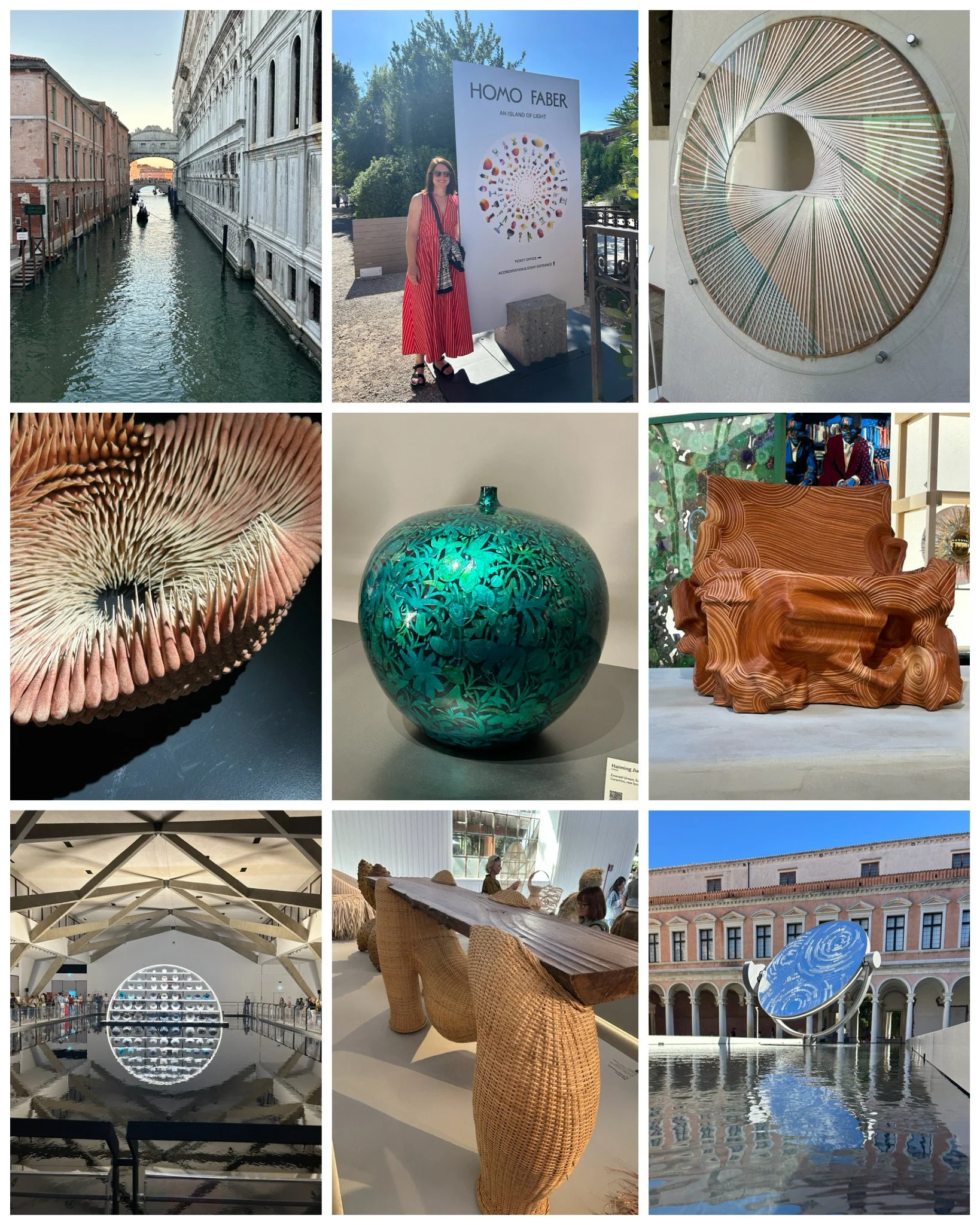
Inspirational trip Venice!
Homo Faber ‘An Island of Light’
A few weeks ago, a lovely lady called Amanda came along to one of my bag workshops. We got chatting, and she told me about a trip she had planned to Venice to visit Homo Faber, the international biennial celebrating contemporary craftsmanship. I was intrigued! The exhibition sounded right up my street, so I decided to book flights and go! As it only runs for a month, I didn’t have long to plan. I asked my mum, who is a painter herself, to come along, and we headed to Venice for three days, 21–24 September 2026. Now in its fourth edition, Homo Faber 2026, An Island of Light, takes place on San Giorgio Maggiore, just across the water from Venice. This year, over 500 artisans from more than 70 countries showcased 700+ handcrafted pieces across 15 immersive installations.
The setting itself is beautiful. The exhibition is held within the historic complex of the Fondazione Giorgio Cini, a former Benedictine monastery restored as a major cultural centre for Venice.
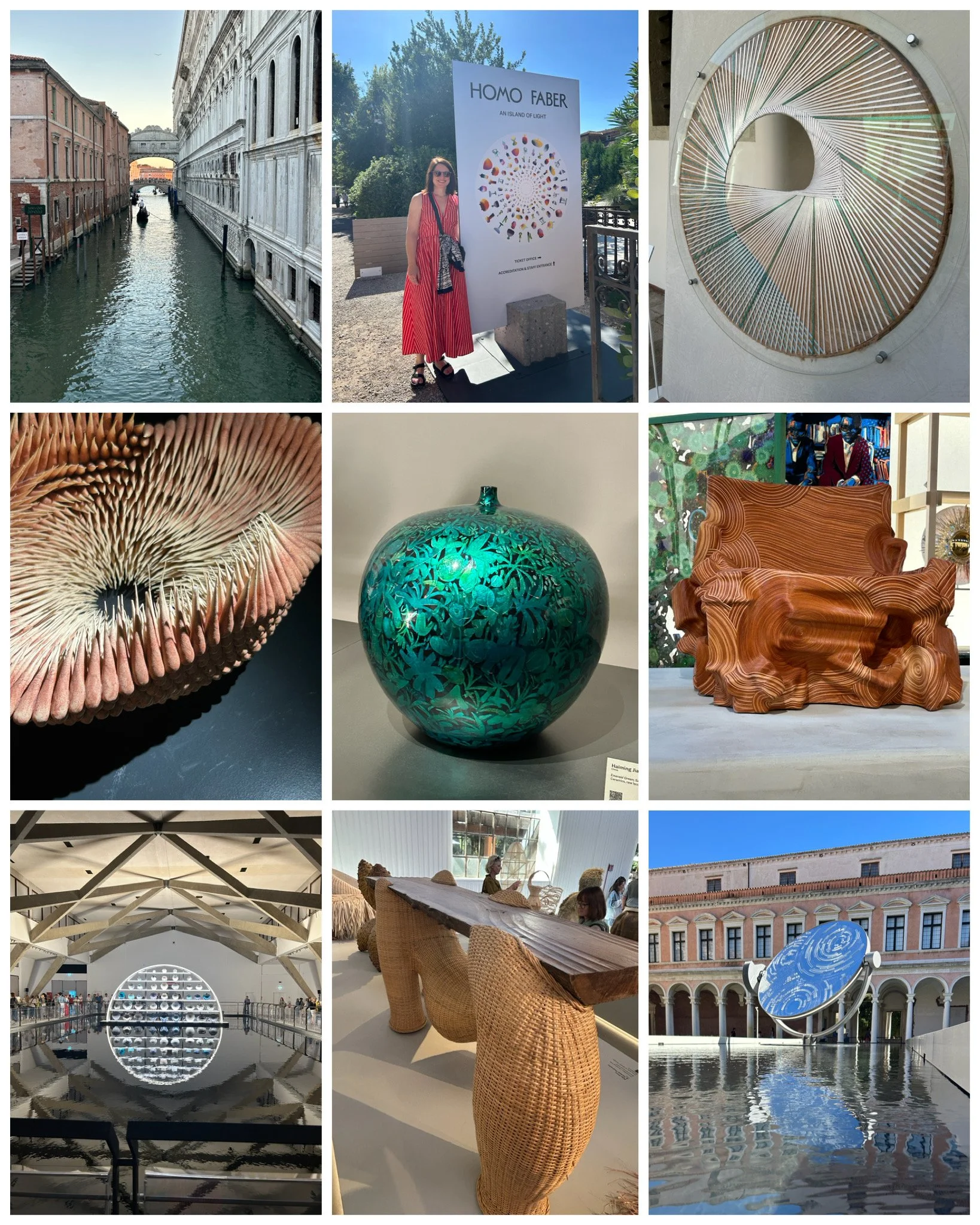
A snapshot of my trip to Homo Faber in Venice
Naturally, I was particularly interested in the leatherwork, but I was also fascinated by the ceramics, glass, wood, paper and basketry. I was especially impressed by the wooden pieces and the incredible craftsmanship involved. There were also artists demonstrating their techniques, including leather artist Kuniko Maeda, who combines molding, laser cutting and dyeing to create intricate, organic forms. There were several pieces made from leather which, at first glance, looked like they were other materials, this just goes to show what a versatile material it is. Below are all items made from leather, except one, can you guess which one?
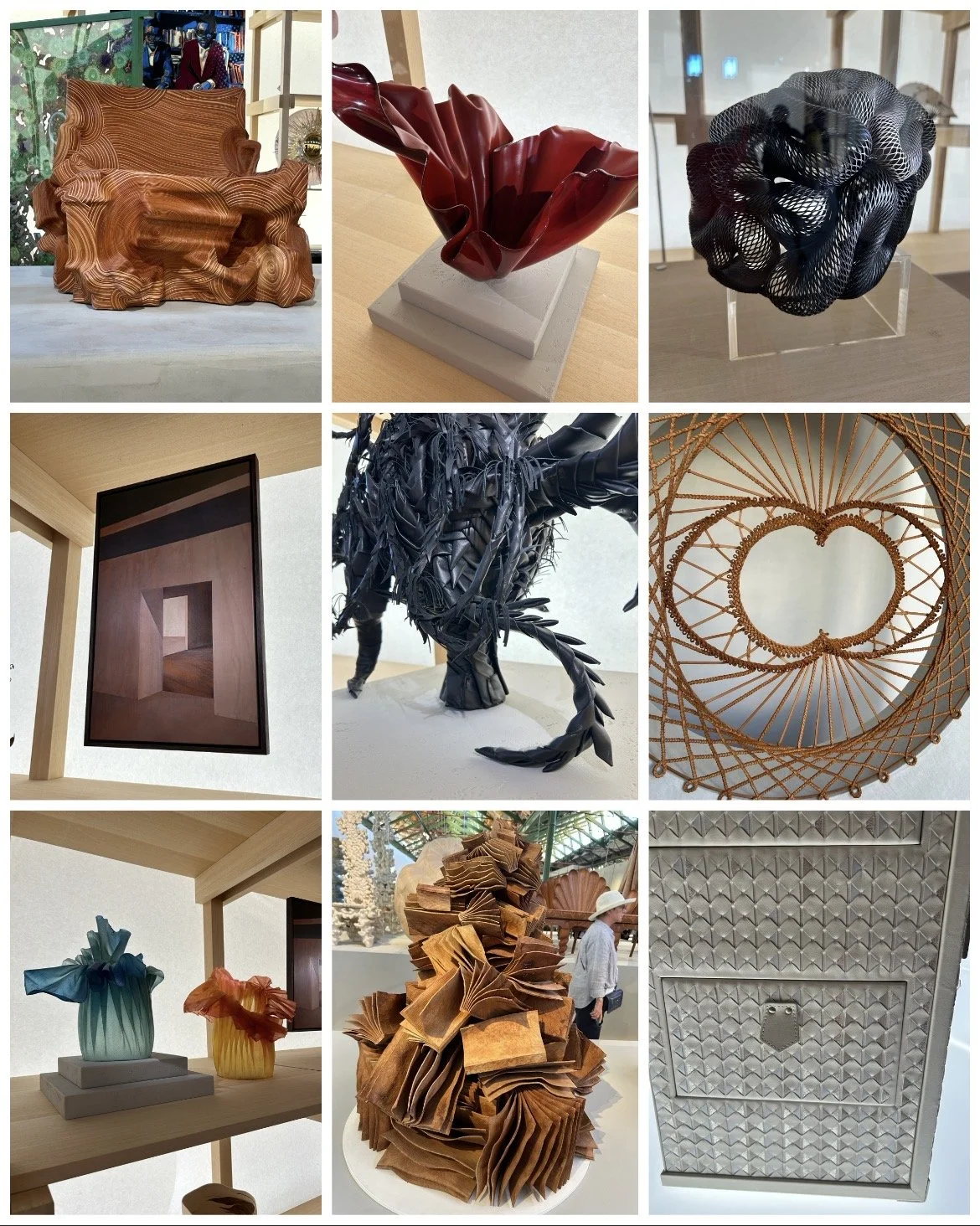
Which is the odd one out?
On the second day of our trip, we also visited The 61st International Art Exhibition of La Biennale di Venezia – titled In Minor Keys , which runs every two years from May to November. Unlike Homo Faber, this exhibition has been running for over 100 years! Held at the Giardini and Arsenale venues as well as various locations across Venice and at Forte Marghera. Sadly, the curator, Koyo Koukh, died suddenly in May 2025, but La Biennale di Venezia decided to carry out her Exhibition. It has followed the project just as she conceived and defined it, with the purpose of preserving, enhancing and disseminating her ideas and the work she pursued.
In Minor Keys had a very different feel to Homo Faber, with a much stronger focus on contemporary and conceptual art than craftsmanship. With 100 countries taking part this year, the main exhibition flows through the building with exhibits in every direction often depicting quite thought-provoking subjects and was rather overwhelming and different to Homo Faber but an interesting experience nonetheless.
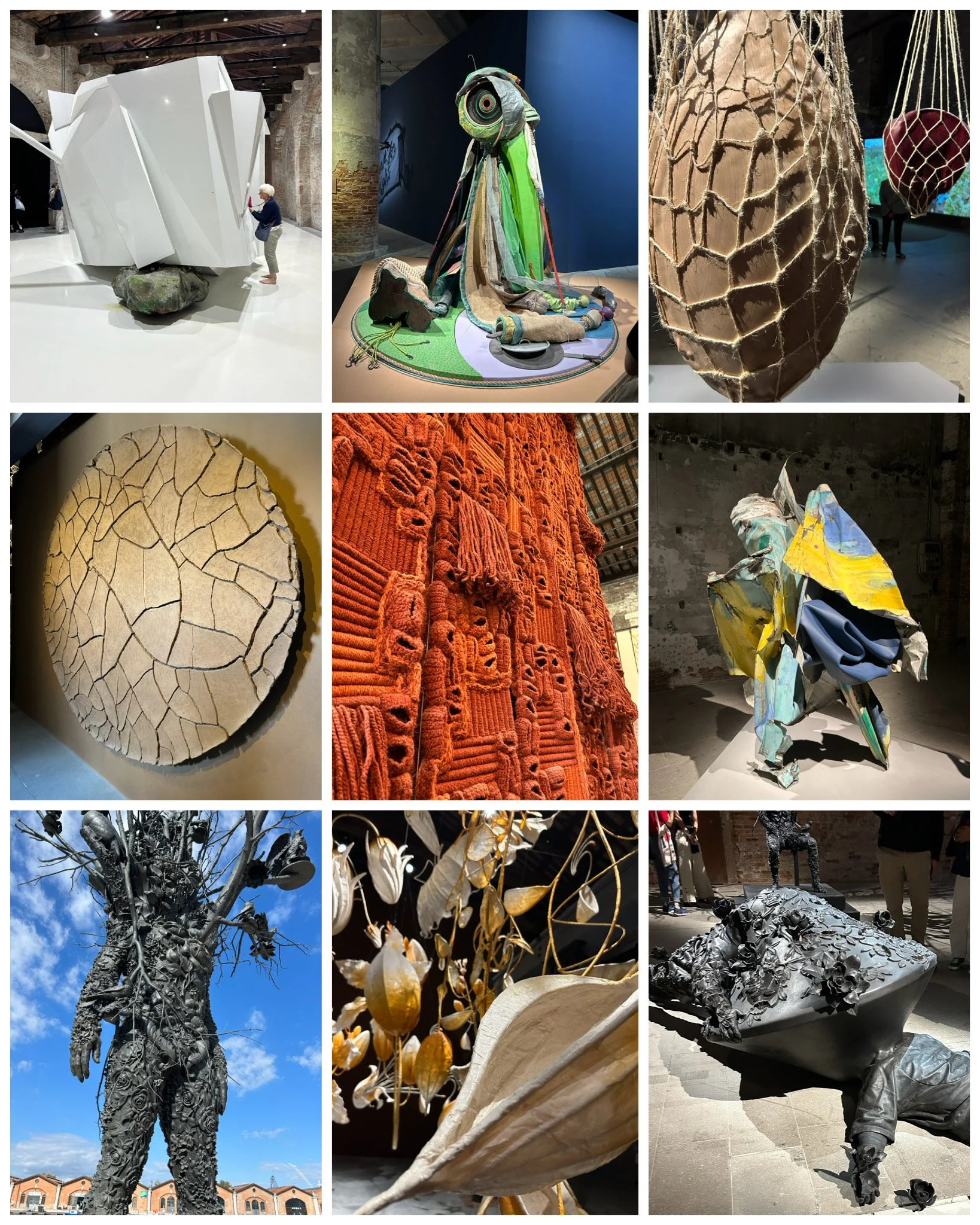
Just a few exhibits from La Biennale di Venezia
My mum summed up the difference rather perfectly in a text to my dad…
‘Just walked around a multi-faceted, very powerful exhibition displayed in various warehouses near the old docks. Very difficult to look at and walk by as a lot of it featured displaced people, war, destruction, alienation and desperate sadness. Yesterday (Homo Faber) was all about celebrating humanity's skill, imagination and artistic creativity. Today was much more about humanity's inhumanity to man. Very sobering.’
I couldn’t have put it better myself! And if you love art, craft and Italian food, I’d highly recommend a trip to Venice! There are exhibitions and galleries to enjoy all year round of course, but September 2028 is one to put in the diary: Homo Faber returns for its 5th edition — and I’m already planning my next visit!
From Rug to Riches? My 10th Money for Nothing Transformation
From Rug to Riches
After an almost three-year hiatus, I was delighted to receive a call from the production company asking if I'd like to take on another project for BBC TV show Money for Nothing.
For those unfamiliar with the show, artisans are challenged to transform unwanted items destined for landfill into beautiful, desirable pieces that can be sold for a profit. It's recycling with a creative twist — and I've loved being part of it over the years. When the producer sent over the photos of this latest item, however, my excitement was mixed with a little apprehension. I genuinely wondered whether I'd finally met my match... or rather, whether my sewing machines had!
The culprit? A rug.
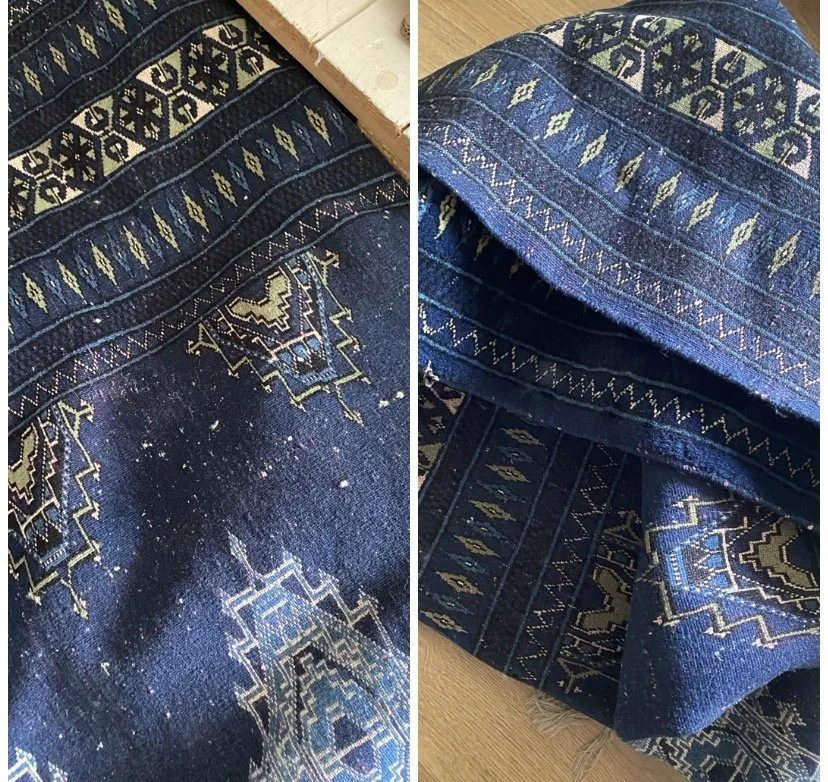
Close up of the rug, showing the reverse of the pattern
This was not a flimsy little rug, either. This was a large, thick-pile traditional rug in remarkably good condition. In some ways, that was a relief. Two of the three rugs I've worked with previously had needed a serious clean before I could even think about redesigning them. This one, apart from a small stain on the fringe, was practically perfect.
The challenge wasn't its condition — it was deciding what to make and figuring out whether I could actually sew through it!
Sarah Moore suggested laptop cases, and I immediately saw the potential to showcase the rug's beautiful patterns in a larger piece too. We settled on two laptop cases and a matching travel hold all.
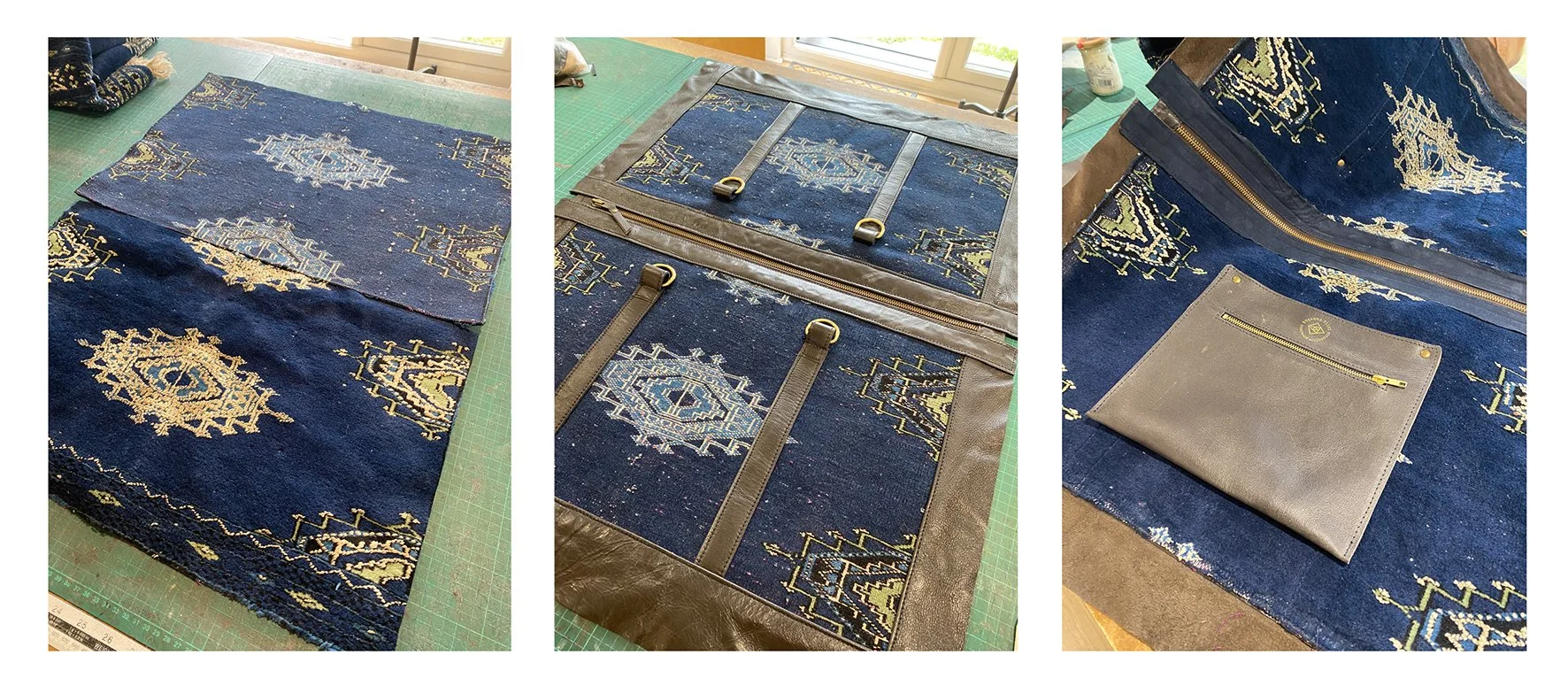
Stages of making the bag - I used the reverse of the rig for the front, added leather panels and a leather pocket inside with the repurposed sofa leather
To make the rug workable, I used my leather skiving machine to shave down the pile and reduce the bulk in the seams. Thankfully, it worked brilliantly. This allowed me to combine the rug panels with leather and create a travel bag that was both practical and not excessively heavy.
For the leather, I used dark brown pieces salvaged from a neighbour's unwanted sofa, while various pieces of hardware were repurposed from other disassembled items. In fact, the only brand-new components were the zips and bag feet. A true upcycling project from start to finish. And below are the finished pieces, ready for their new homes!
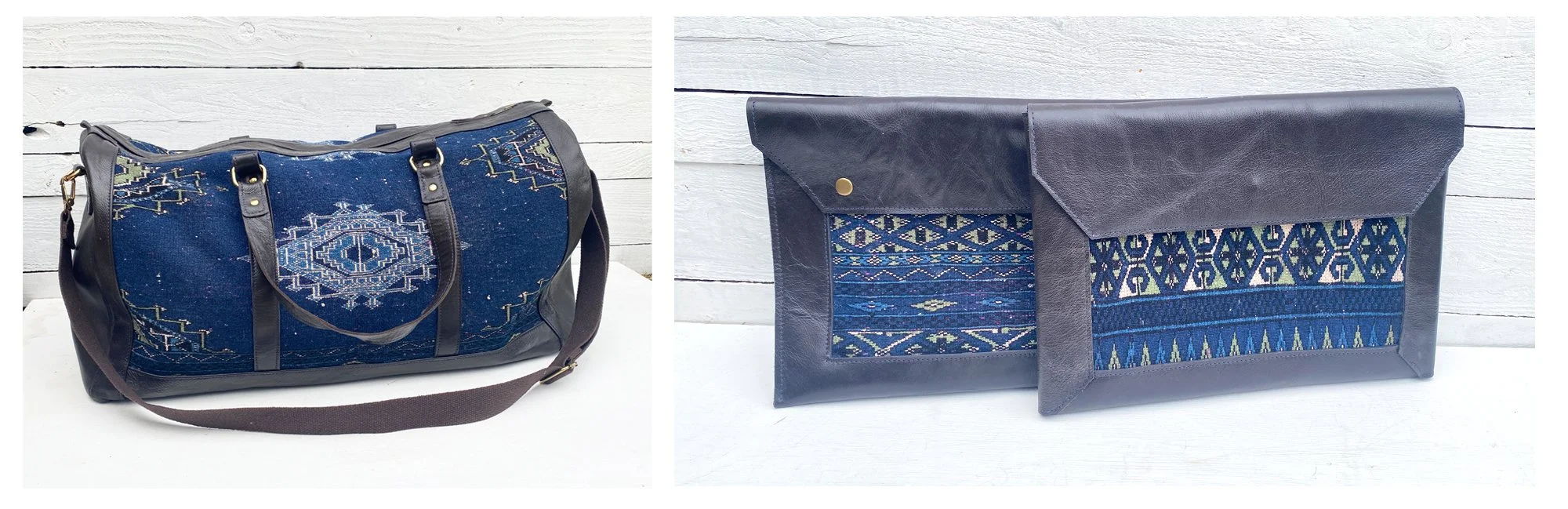
Completed travel bag and laptop cases
This marks my 10th project for Money for Nothing, joining a wonderfully eclectic collection of previous transformations shown in the montage below, including:
Three rugs
A water-ski rope and life jacket
100-year-old horse tack
Seed sacks
A bright yellow golf bag
Countless pairs of curtains (honestly, I've lost count!)
It's always a privilege to take something overlooked and give it a second life — although I must admit, this rug had me sweating a little more than most!
#repurposedrug, #upcycledproject, #sofaleather, #travelbag, #laptopcase
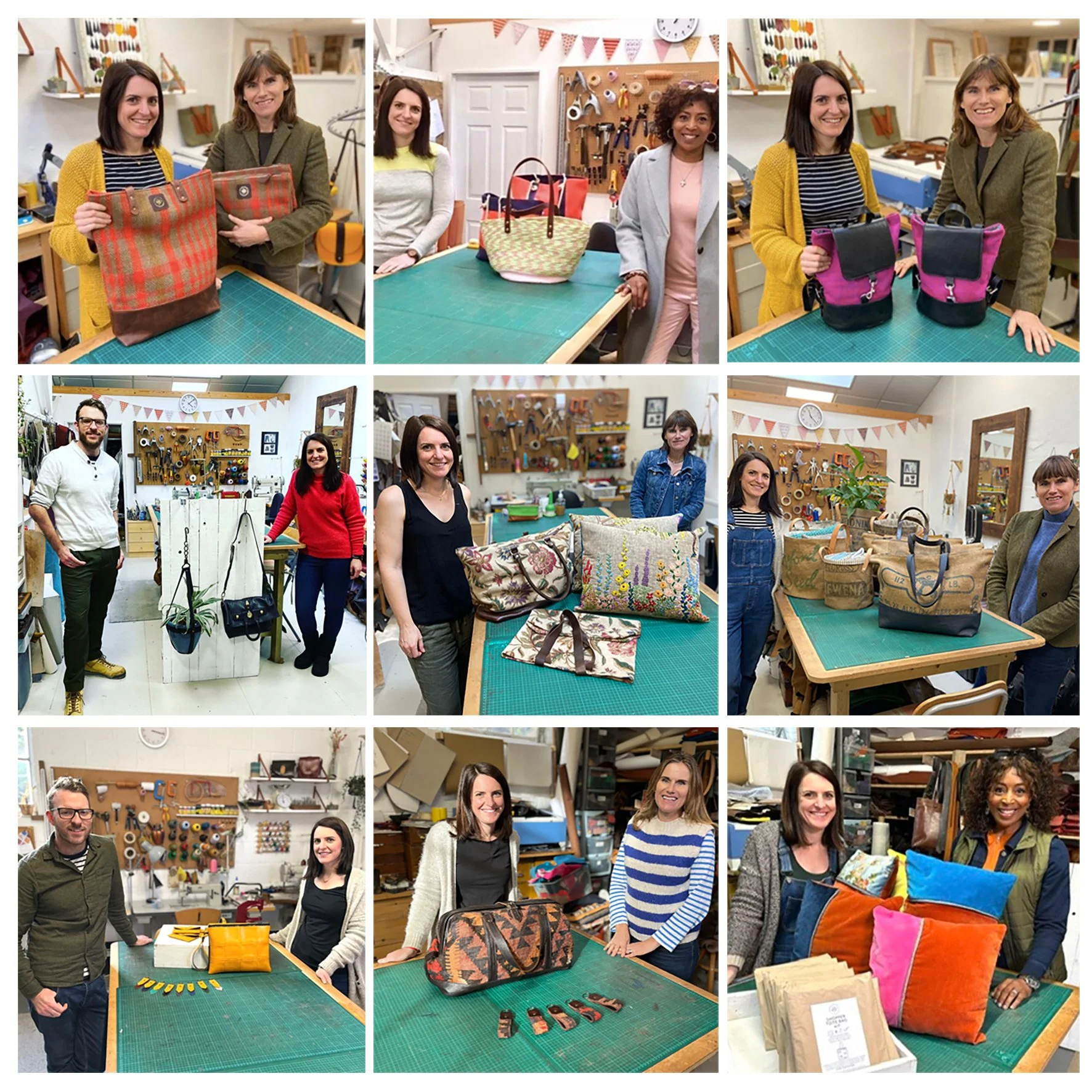
All 9 of the previous projects I have completed for Money for Nothing! I wonder what will be next! Watch this space for when the next episode is on TV
The Women Who Shaped My Creative Journey
International Women’s Day
As I reflect this International Women’s Day on Sunday 8th March, I’m reminded of the incredible women who have shaped my path—both in life and in my creative journey with leather. Each of them has left an indelible mark on the way I approach my craft, my business, and my vision.
FAMILY
From a very young age, my mum was my first mentor. She introduced me and my sisters to the world of art and craft. As an artist herself and an exceptional seamstress, she showed me the magic of creating something with your own hands. I remember the dresses she made for me and my sisters growing up, the wedding dress she created for her own wedding and even the tiny, perfectly stitched outfits for my Barbie and Cindy dolls. Her skill, patience, resourcefulness and creativity left a lasting impression, teaching me that attention to detail and love for your craft can transform ordinary materials into something extraordinary—a lesson I carry into every piece of leather I work with today. Then there are my siblings! My older sister, Katherine, is the ultimate planner and voice of reason—she’s the one who keeps me grounded, encourages me, and always helps me think three steps ahead. My younger sister, Belinda, is a creative whirlwind—a brilliant painter (see her work here) with an uncanny eye for design and detail, and she is a great supporter of my work and business – from modelling in photo shoots and videos and buying my work for friends - as well as herself (at mate’s rates of course!).
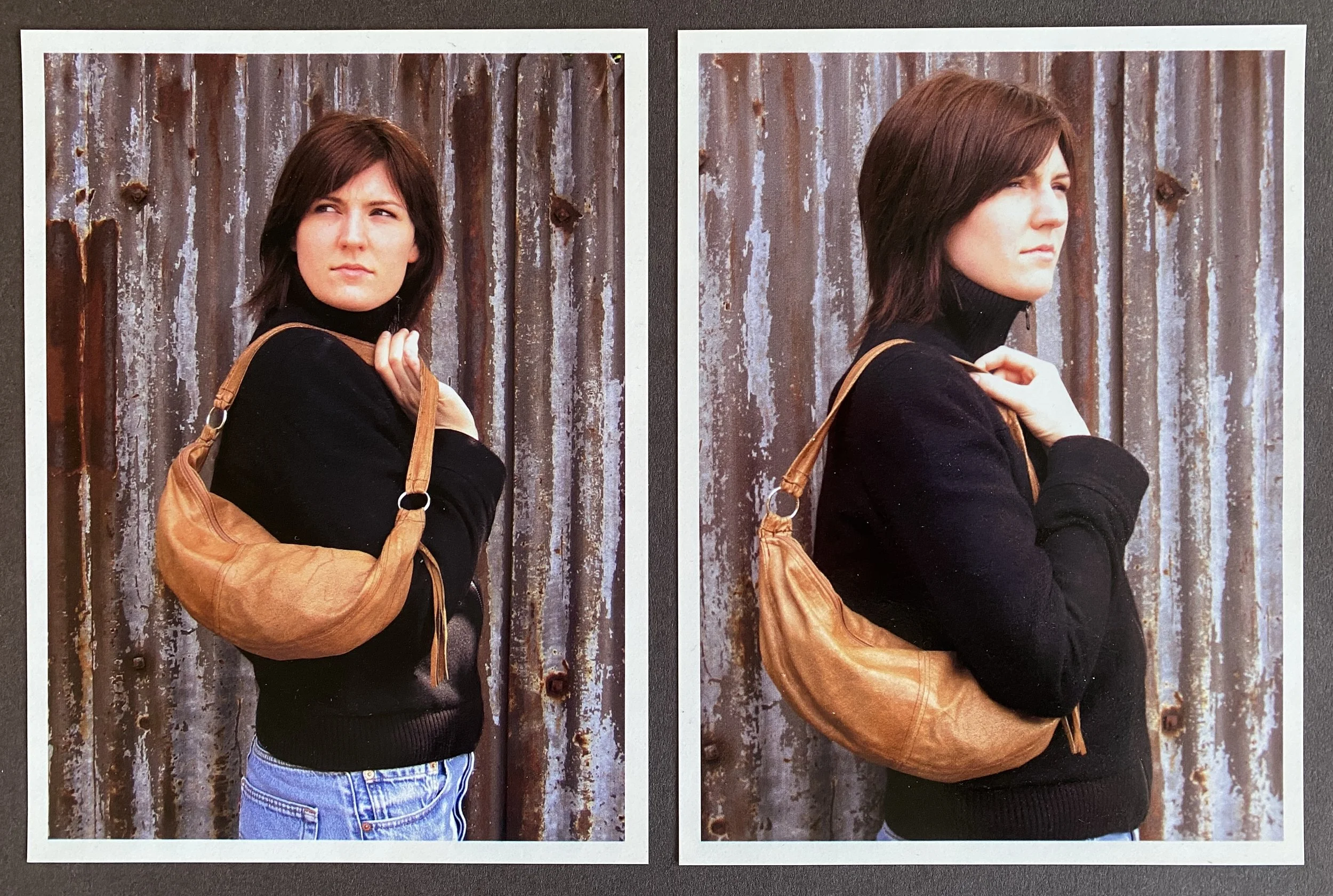
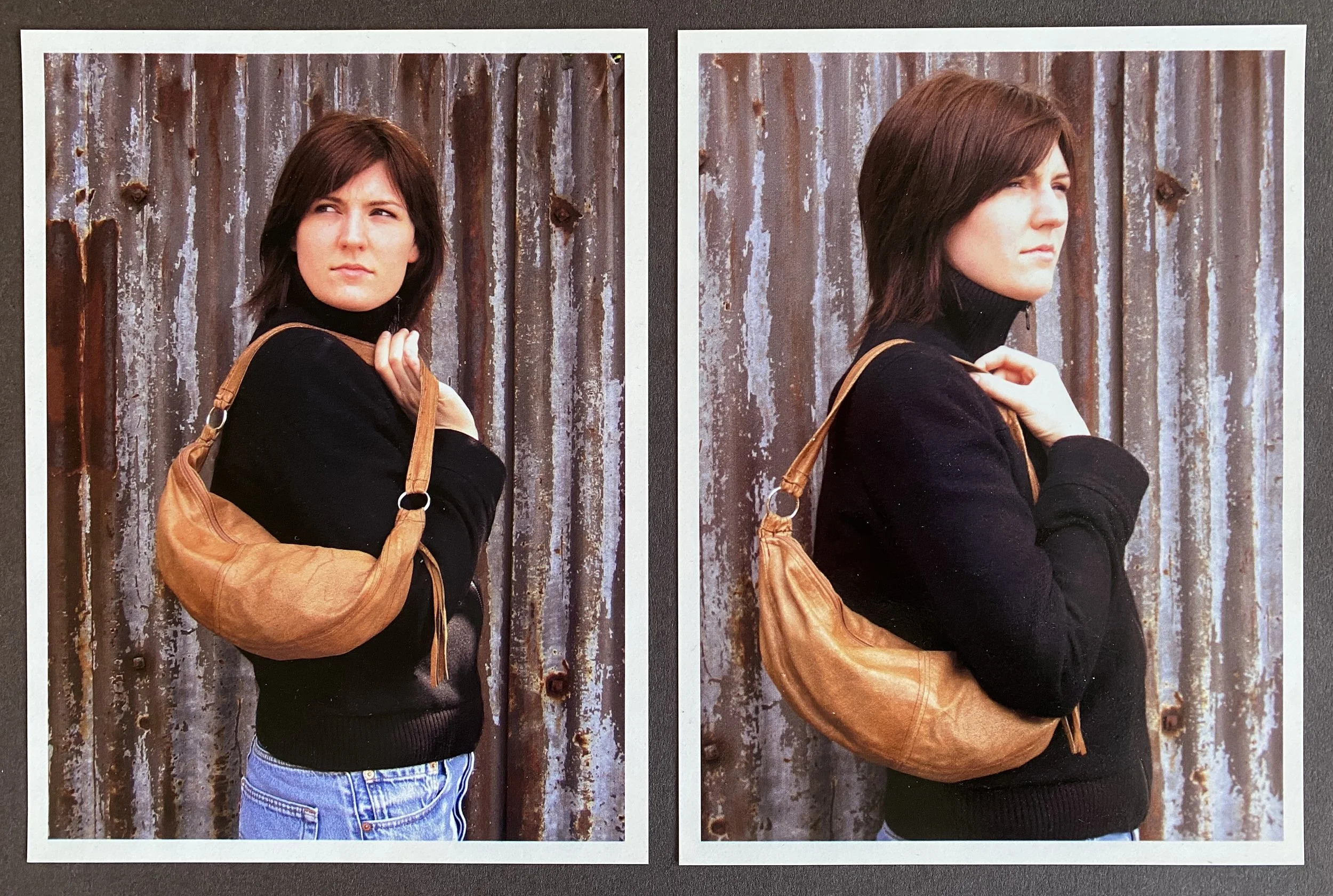
My younger sister Belinda modelling some of my earliest bag designs created on my Mum’s old Elna sewing machine she gave me.
MENTORSHIP
Mentorship continued to play a pivotal role in my journey. Patricia Van Den Akker of The Design Trust, has been an incredible guide since the start. Straight-talking, no-nonsense, and endlessly supportive, Patricia has helped me refine my approach to both design and business. Her courses and advice, particularly the ‘Dream Plan Do’ monthly planning program, have been instrumental in helping me achieve my best financial year yet, surpassing my goals by over 10%. The right mentor doesn’t just guide you—they challenge you, inspire you, and help you see possibilities you might not have dared to imagine.
Supportive communities have also made all the difference. Moving from Surrey to Essex could have been isolating, but joining The Hook Project—a monthly networking initiative run by two inspiring ladies – Lucie & Charlie—opened up a world of encouragement and connection. Sharing ideas, experiences, and inspiration with other women in business gave me the confidence to continue growing, even in moments when I’ve been uncertain of the path I want to take.
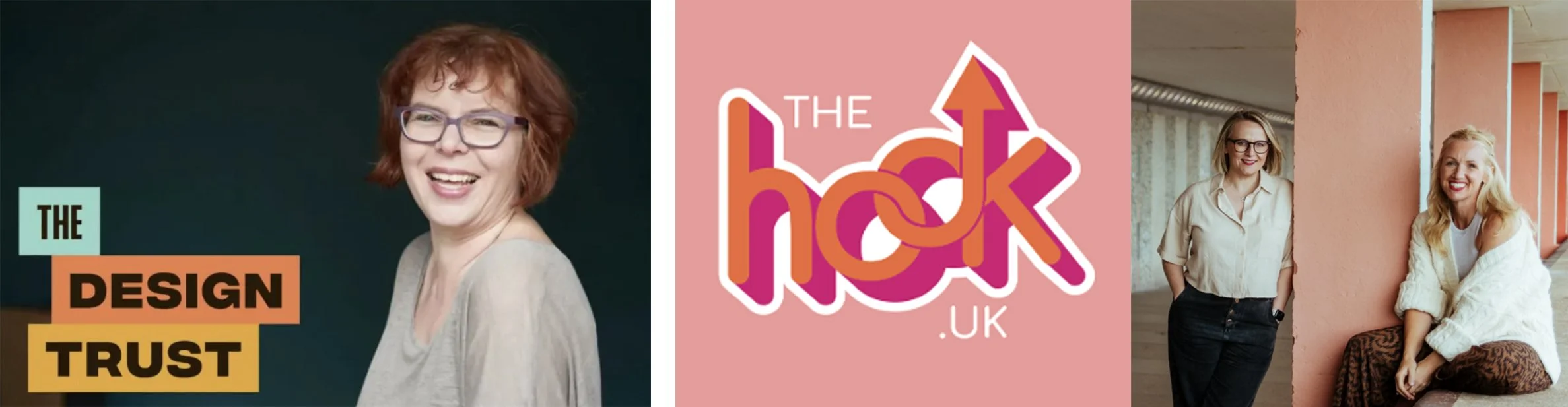
Patricia from the Design Trust & Lucie & Charlie from The Hook Project
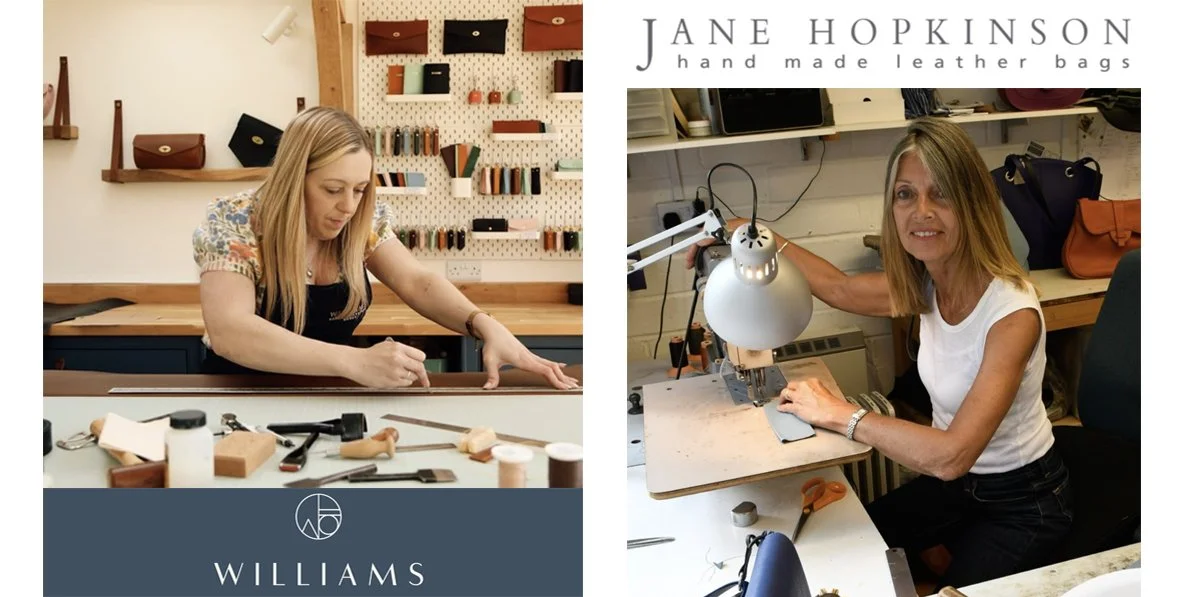
Finally, seeing other female makers thrive in what has historically been a male-dominated industry gave me the courage to start my own brand. Women like Sarah Williams of Williams Handmade and Jane Hopkinson (also a former school teacher like me) of Jane Hopkinson Bags showed me that passion, skill, and perseverance could translate into a successful leather craft business. Their success inspired me to believe in my own abilities and to take the leap into creating a brand that honors both craft and sustainability.
Looking back, the challenges, lessons, and milestones of my journey are woven together like the very leather I work with - layered, resilient, and full of character. On this International Women’s Day, I celebrate the women who taught me to dream, the mentors who guided me, the communities that supported me, and the trailblazing female makers who inspired me to create something meaningful every day.
Here’s to the women who inspire, challenge, and uplift—one stitch at a time.
#InternationalWomensDay #WomenInCraft #ReclaimedLeather #MentorshipMatters #CreativeJourney
Repairing Leather Goods: Giving Beloved Pieces a Second Life
WHY I DO REPAIRS
In recent years, I’ve seen a growing shift in how people think about their belongings — particularly leather goods. Rather than throwing items away at the first sign of wear, more and more customers are choosing to repair, restore, and preserve pieces that still have value, both financially and emotionally. Leather repair has become a significant and rewarding part of my work, and one I feel strongly about.
Why I Do Repairs
People come to me for many reasons. Sometimes it’s purely practical: replacing a worn strap or fixing a broken zip is far more economical than buying new, especially when it comes to luxury items. Designer bags in particular can retain — or even increase — their value when properly cared for, making repair a sensible long-term investment. Often, though, the motivation is sentimental. A bag carried for years, a jacket inherited from a loved one, or a suitcase that has travelled the world holds memories that simply can’t be replaced. Being trusted to work on these items is something I don’t take lightly. From my perspective as a maker, repairs are also deeply satisfying. They provide a steady and meaningful income stream, but more importantly, they allow me to save well-made items from landfill and give them a new lease of life — something that aligns closely with my values around sustainability and responsible consumption.
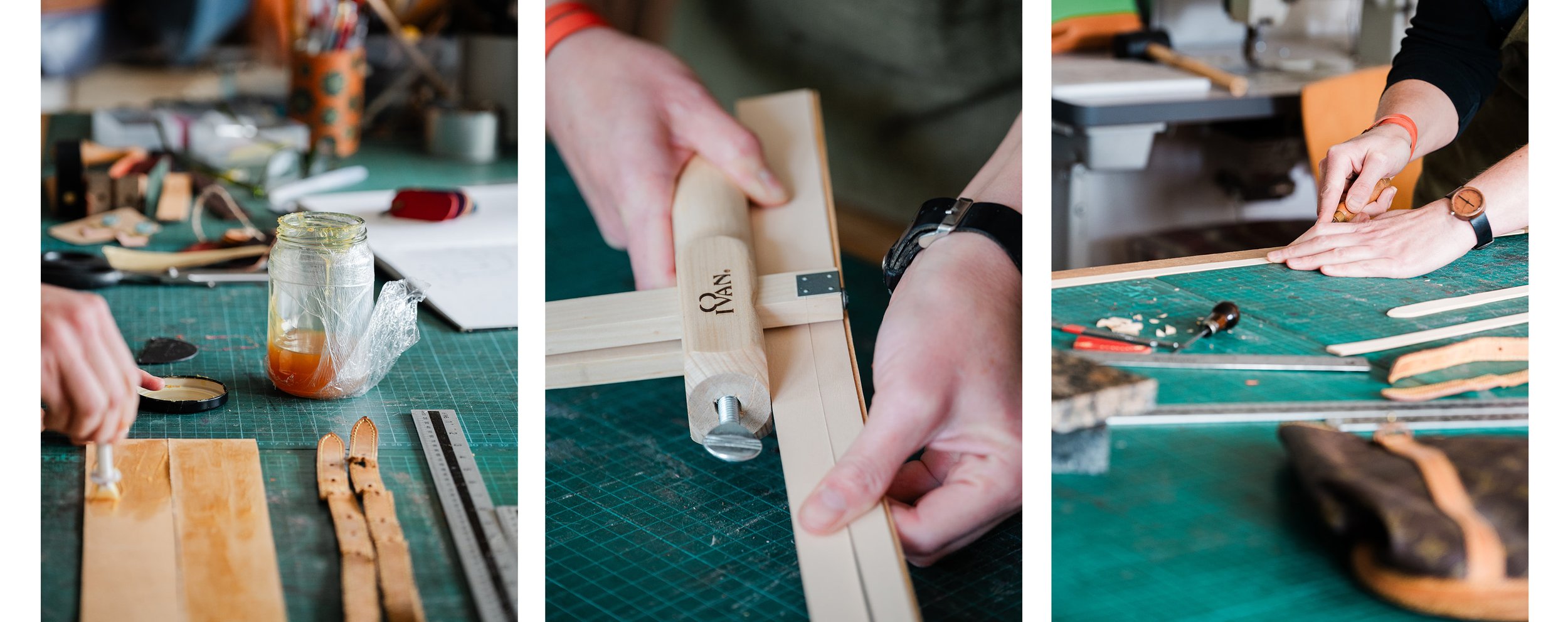
Remaking leather straps for a Louis Vuitton Bucket Bag; glueing, cutting and shaping
What I Repair
The majority of my repair work focuses on leather bags and accessories, including wallets and belts. I also undertake cosmetic repairs to shoes — though it’s worth noting that I am not a cobbler, so structural shoe repairs are outside my remit.
In addition, I regularly work on vintage suitcases, Leather jackets, particularly rips, tears, and colour restoration, Interior linings and trims
Each item presents its own challenges, and no two repairs are ever quite the same.
Some of the most frequent issues I see include:
Broken or weakened straps, often in high-stress areas
Faulty or broken hardware, especially zips
Worn corners, piping, and edges
Common Repair Techniques I Use
Full colour restoration to revive faded or scuffed leather
Lining replacements where interiors have deteriorated
Top trim replacement on bags & corner repairs with filler and repainting
Repairs to jacket tears, followed by careful colour blending
Every repair begins with a thorough assessment, followed by a considered approach that balances durability, aesthetics, and respect for the original design. Below are some examples of my repair projects with techniques used as described above.
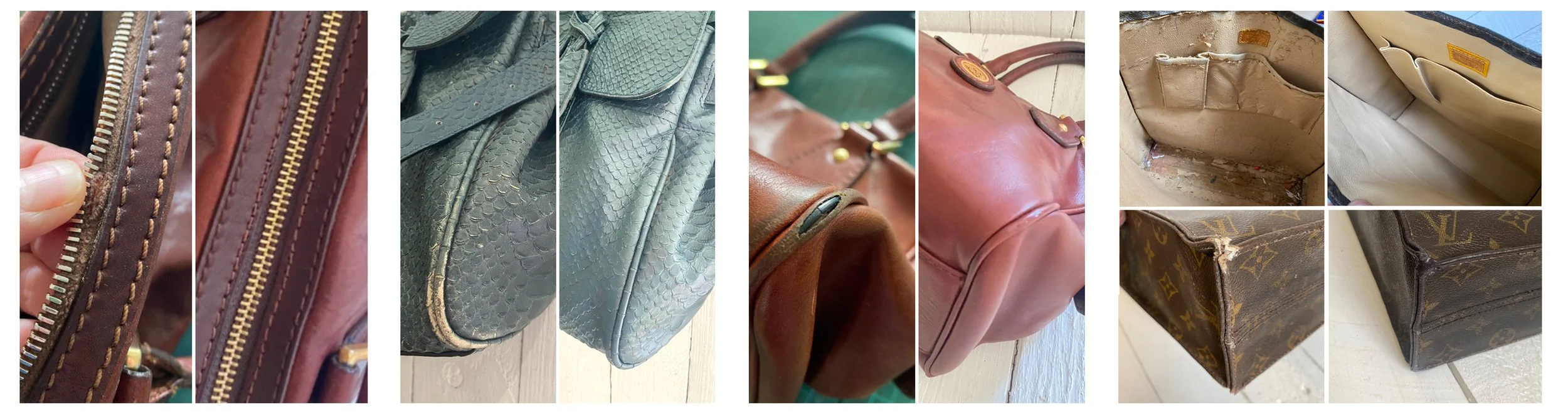
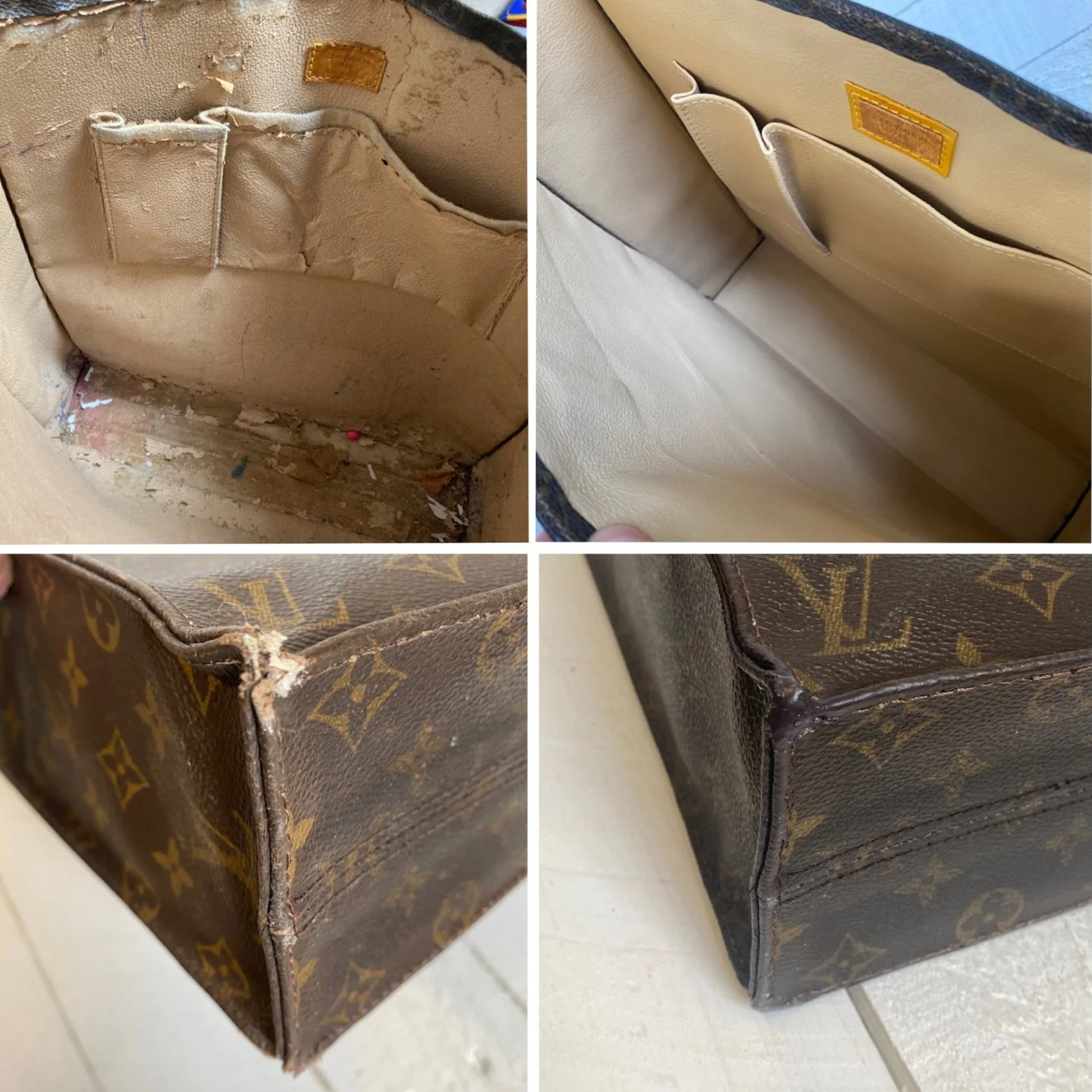
Before and After: 1. Zip replacement, 2. Colour restoration of a Croc Print Mulberry bag, 3. Piping repair on a Bridge Bag, 4. Complete restoration of a Louis Vuitton Tote bag including new lining and corner repair & recolour
Frustrations and Learnings
One of the more frustrating — and eye-opening — aspects of repair work is discovering the materials used inside some high-end designer pieces. Despite the price tags, I frequently encounter straps and stress points constructed from synthetic or mediocre materials, sandwiched between thin layers of leather. These areas naturally fail first, particularly on heavily used bags.
This is something I’ve seen repeatedly with major luxury brands, including names such as Louis Vuitton and Chanel. While the exterior craftsmanship may look impressive, the internal construction doesn’t always match the brand’s reputation — which makes skilled repair all the more important.
A Thoughtful Alternative to Replacement
Ultimately, leather repair is about slowing things down: valuing what we already own, making thoughtful choices, and extending the life of well-loved items. Whether it’s a practical fix or a sentimental restoration, repair offers an alternative to replacement — one that’s kinder to both your wallet and the environment. These principles underpin my own designs, with every piece carefully made to last and be enjoyed for years to come.
If you have a leather item in need of attention, I’m always happy to advise on what’s possible and help you decide the best next step. See my Repairs Instagram account here for more examples of previous work or check out my website page here for next steps if you have an item in need of some TLC.

Turning a Passion into a Profession: Celebrating 10 Years of Rosanna Clare
10 years of running my leather craft business
This month marks ten incredible years since I took the leap from teaching to following my dream full-time. After spending a decade as a Design & Technology teacher, I finally gave up the classroom to dedicate myself to my hobby — leather craft. It was a scary, exciting step, but one that has shaped the past 10 years of my life in ways I could never have imagined.
What started as a little hobby, upcycling old jackets and sofa leather, has grown into a full-time profession; a studio filled with tools and textiles and a community of people who appreciate thoughtful, handmade design.
How It All Began
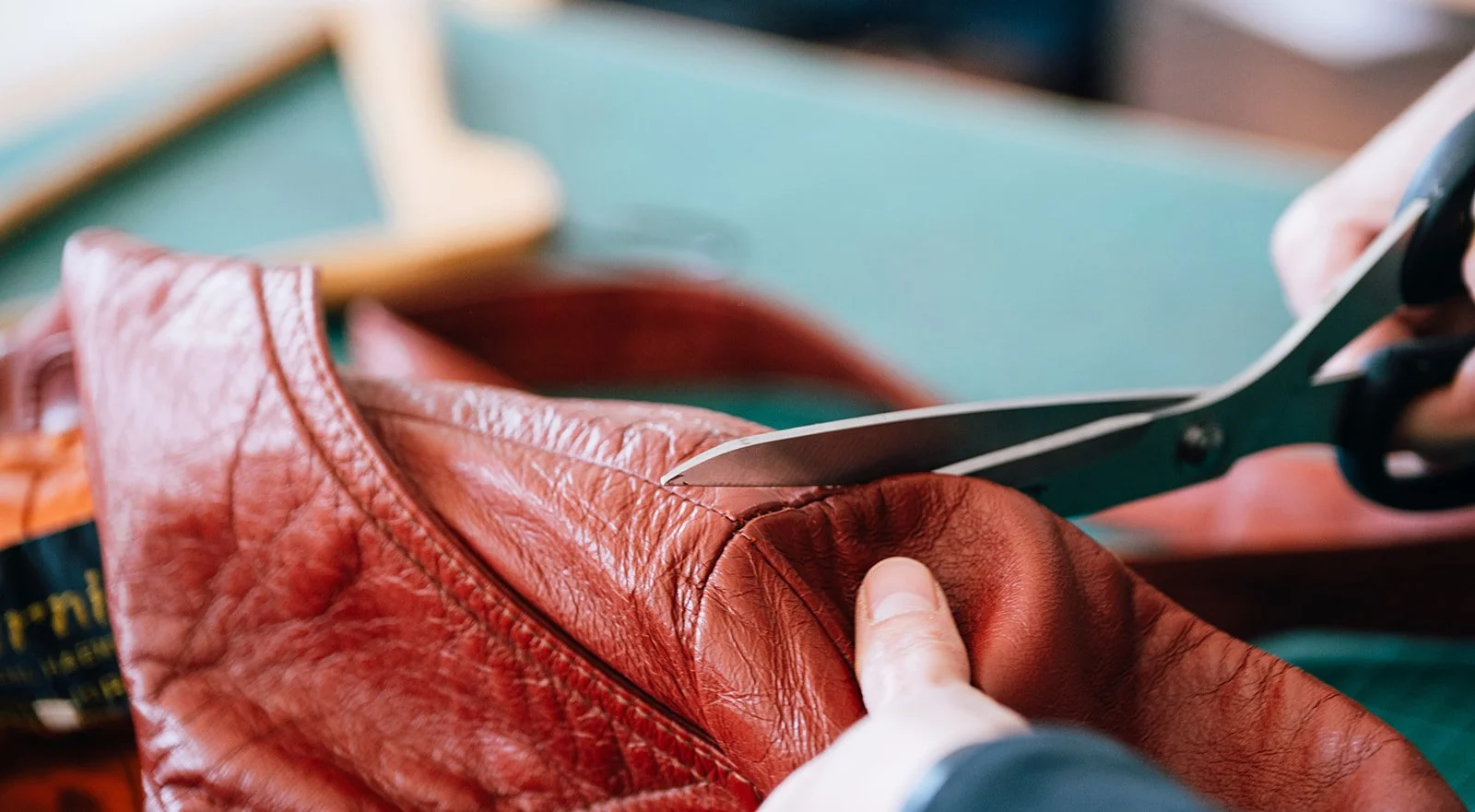
My fascination with leather happened almost by accident - a visit to a craft market with beautiful leather goods for sale. These were out of my budget so as a recent design graduate I thought why not have a go myself!
My early creations were ambitious — cobbled together on a little domestic sewing machine despite the fact that I’d never used one before! I bought some leather and asked my mum to teach me to sew, and I was instantly hooked.
I spent months practising on her old Elna machine, using just a leather needle and regular thread. I’d buy old bags from charity shops, take them apart, study how they were made and rework the pieces into something new. It was a lot of trial and error — but that’s what design is all about: experimenting, deconstructing, and creating.
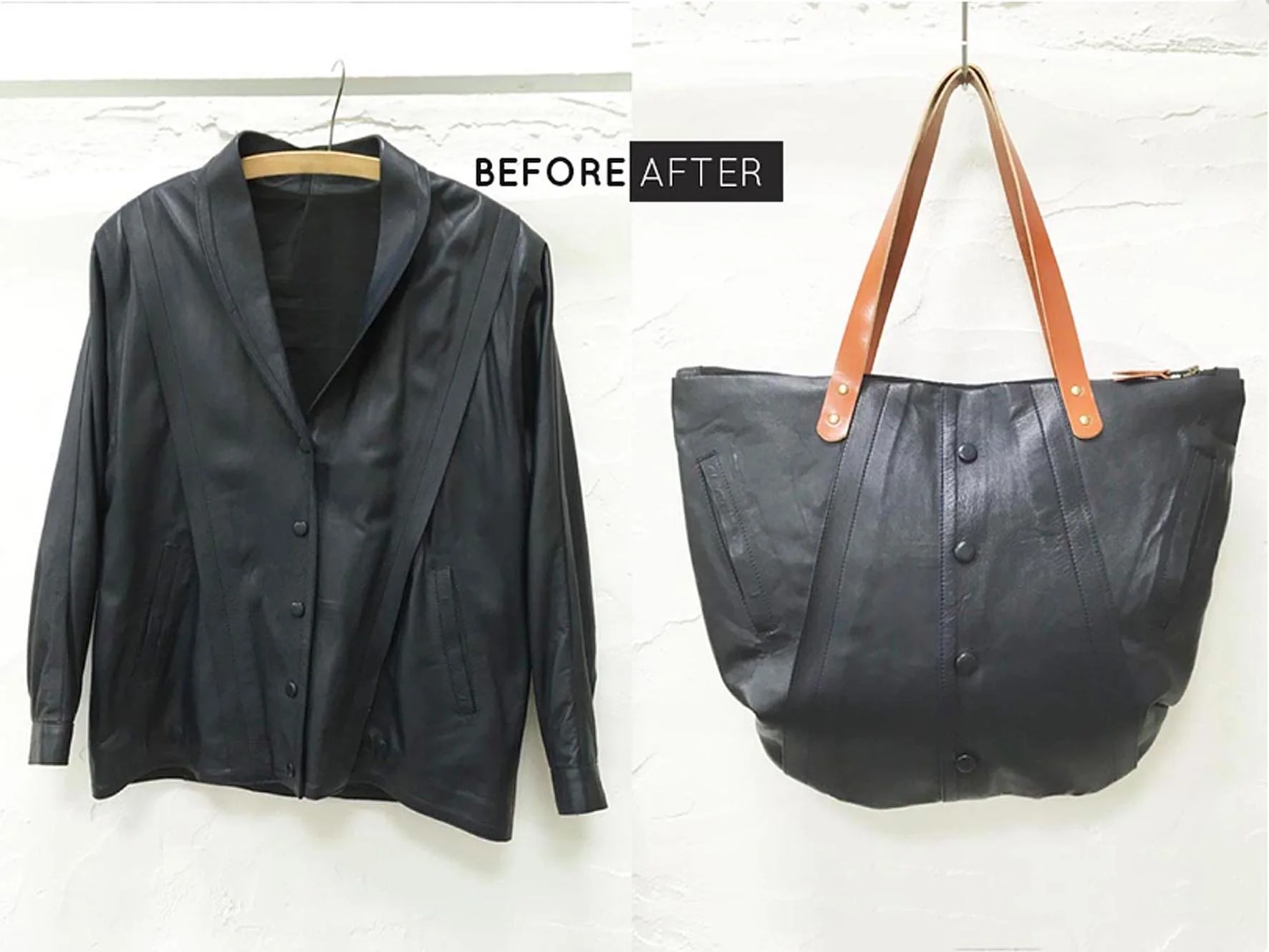
Charity shop jacket turned into a Tote Bag
Highlights Along the Way
Looking back, there have been so many pinch-me moments — but two stand out above all:
📚 Writing my leather craft book, Sew Luxe Leather was an incredible milestone — a chance to share my passion for making and inspire others to explore creativity by hand. Being approached to write it just 18 months into the business gave me a real confidence boost and reminded me that I could keep going, even when things got tough.
✨ Appearing on BBC’s Money for Nothing, which helped broaden my reach, bringing my work to a wider audience and showcased how sustainability and style can go hand in hand. Of course, none of this would have been possible without the incredible support of my friends & family, customers, students, and fellow makers who’ve believed in my work. Every message, purchase, and workshop booking means the world to me.

My Leather Craft Book & First Project for ‘Money for Nothing’ with Sarah Moore
What’s Changed — and What Hasn’t
Over the years, my workspace has evolved almost as much as my designs — from sharing a space with my mum at the start, two rented spaces to my very own place. This autumn also marks one year since moving into my garden studio — my fourth space, but the first that’s entirely my own! 🌿💛 It’s been a dream to have a space to create, teach, and repair leather treasures, steps from home, surrounded by nature.
My designs have become more refined, but the heart behind them remains the same: to create pieces that are built to last, with care and conscience.
In recent years, I’ve also grown my repair service, as more people choose to mend and maintain the things they love rather than replace them. I absolutely love restoring and repairing leather items, helping them continue their journey instead of ending up in landfill. There’s something deeply satisfying about giving a much-loved bag, belt or briefcase a new lease of life, honouring its history while extending its future.
Whether I’m hand-cutting a clutch bag, teaching someone how to make their first leather item or carefully repairing a treasured heirloom, that same spark that led me to turn my passion into my profession ten years ago, is still alive today. See a snapshot of what I do in this short film.
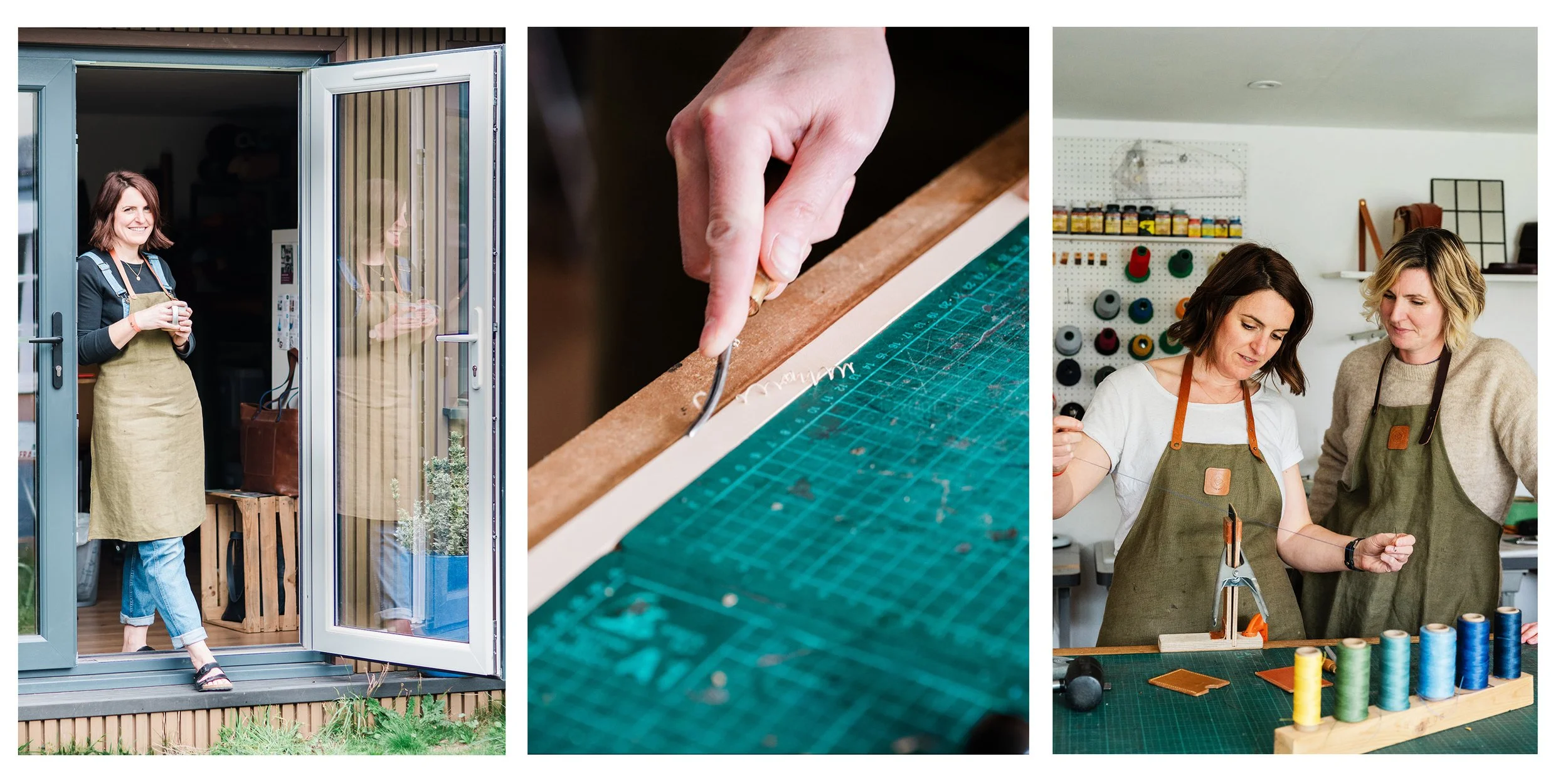
New studio, working on repairs & teaching workshops!
Looking Ahead
As I celebrate this milestone, I’m filled with gratitude — and excitement for what’s next. New collections are in the works, workshops are planned, and plenty of creative ideas are brewing. My goal for the next decade? Keep creating, keep learning, and keep proving that craftsmanship and sustainability are always in style.
🎁 Anniversary Giveaway
To say thank you for 10 wonderful years, I’m giving one lucky winner a £50 voucher to spend on any Rosanna Clare product or workshop! 🎉
👉 To enter:
1️⃣ Follow @rosanna_clare
2️⃣ Comment with your favourite Rosanna Clare piece or memory
3️⃣ Tag a friend who loves handmade design
The winner will be announced on 1st December 2025 on Instagram and in my December Newsletter!!
Sign up to my monthly Newsletter here for updates on products, events & courses.
Thank You
From the first cut of leather to the hundreds of pieces that have left my (various!) studios since, this journey has been extraordinary — and it’s all thanks to you. Whether you’ve bought a bag, joined a workshop, or trusted me to repair something special, you’ve been part of my story.
Here’s to the next ten years of creativity, sustainability, and beautiful craftsmanship — from my very own garden studio, following the dream I once only imagined.
With love and gratitude,
Rosanna Clare 🤎

Dad's Army Bag Transformation
An old army sack gets a new lease of life!
On the 24th June I received an email from a lady called Angela who had just watched my most recent episode of Money for Nothing on the BBC (catch it on BBC Iplayer here). In the episode, I upcycled a Kilim rug into a Gladstone bag and 5 key fobs. Inspired by the show, she asked if I could take her late Dad’s old Army sack and turn it into a bag for her.

Army bag front and back
After some discussion of different options, Angela opted for a satchel type bag so I sent her the designs below showing how the sack could be combined with leather and new canvas in brown, black or blue. She loved the design but wanted the text to be on the front of the bag with the flap made of leather to preserve the text from wear and tear.

Satchel Design with different colour way options
Once we had agreed on the design and all the elements such as the lining, shoulder strap and handle, I got to work. I used black leather from an old sofa, keeping with the upcycling theme and a blue denim cotton for the lining.
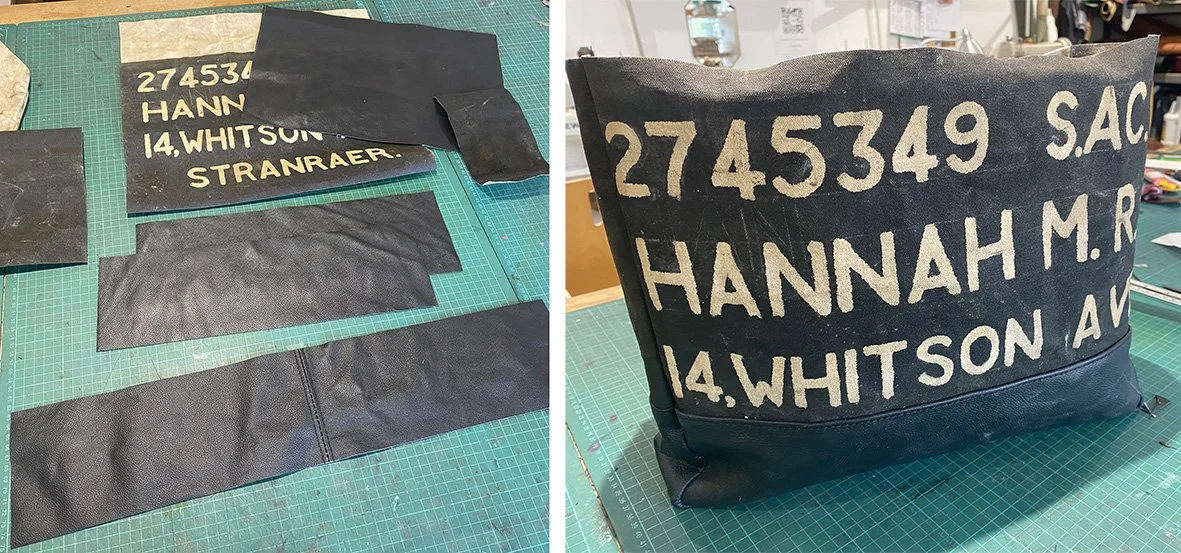
Bag making in progress
The final product…
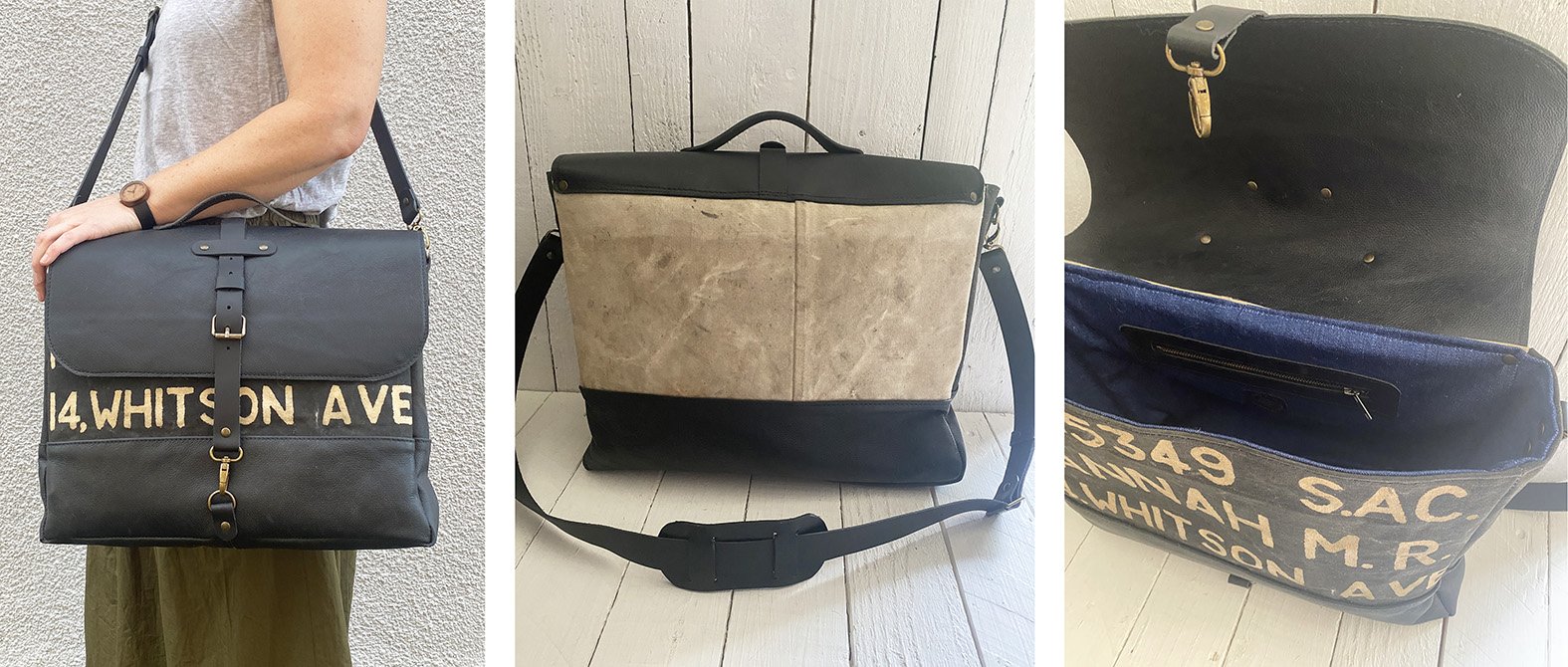
Front, back and inside of the finished satchel
I love doing commissions like these as they not only hold a lot of sentimental attachment, but each one is unique and receiving feedback like this below, is so rewarding. If you have an item you would like transformed into a bag, be it a rug, sack or jacket, do not hesitate to get in touch to discuss the options. You can see other examples of projects like this here.
Angela’s review
I recently had a satchel made from my father’s old army sack , 80 years old, by the extremely talented Rosanna . The sack is now preserved which I will treasure and it will be passed down to my daughter . Her craftsmanship is second to none. Words are difficult to express how delighted I am. Thank you, Angela x
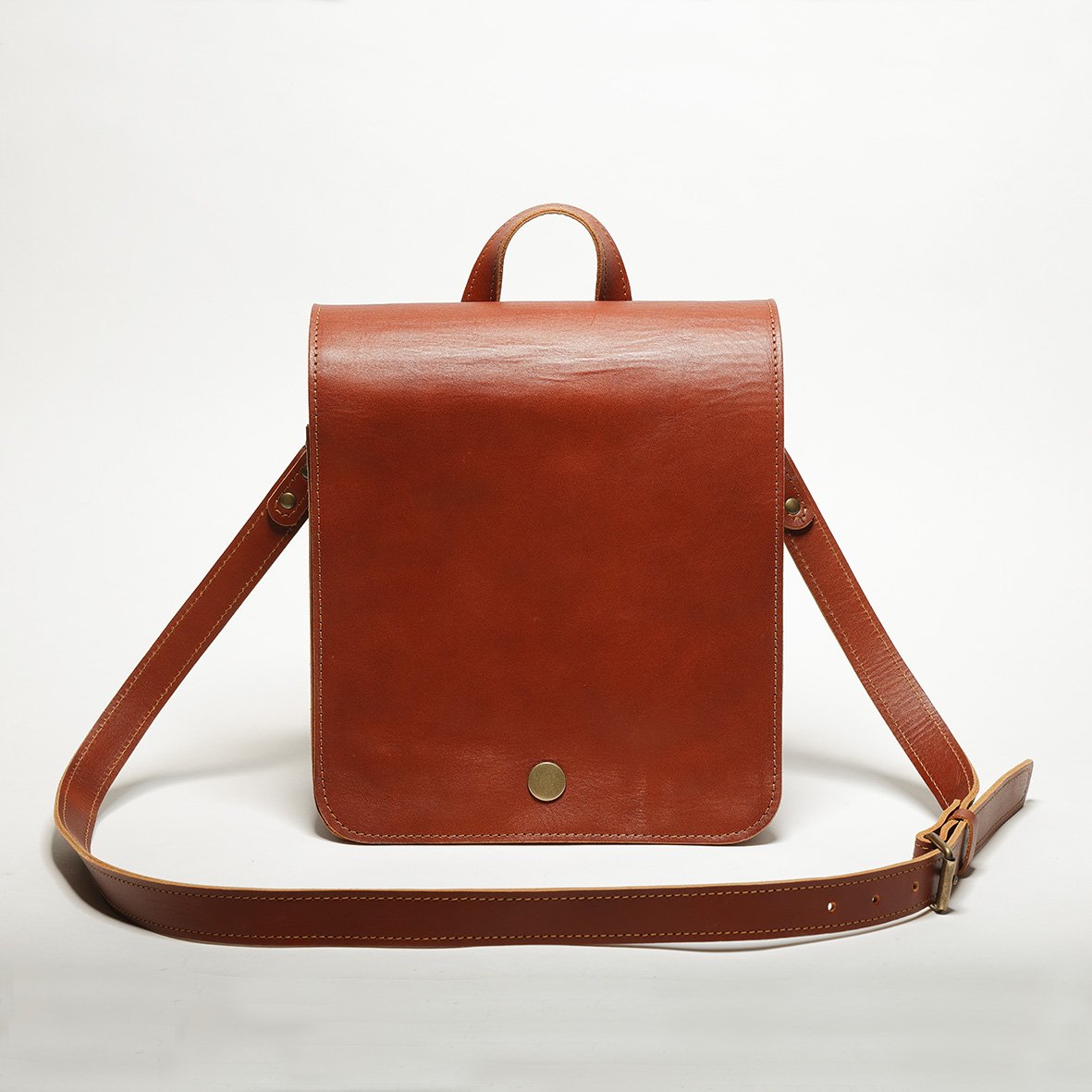
Student Success - amazing messenger bag creation
Case Study of a student’s bag created on my Two Day Bag Workshop
Earlier this year I had the pleasure of teaching Christiane in my Two Day Bag Workshop where she made this beautiful and multifunctional messenger bag. Christiane contacted me back in the summer of 2024 with her interest in my workshops, particularly this two day course in order to realise her ambitious project. I created the two day course for this exact reason; for people who wished to make a specific design (not one of my patterns) of their choosing, hence the two days instead of the usual one or even half day so some of my simpler bag courses. However, when she told me about all the elements she wanted to include, I was concerned we wouldn’t have the time to complete it, until I saw her previous work! Below are 3 of Christiane’s creations of fabric bags she has made multiple sections, involving great skill so I know she was up for the task!

Bags made by Christiane prior to the course
On the first morning of the two day workshop, we always start with planning out the paper templates for the bag which involves lots of sketching out and measuring. Christiane came fully prepared and had actually already mocked up her own paper model of the bag which helped this stage enormously and saved a lot of time. However, the complexity of her design meant we had a few elements to work out including the order in which to make and construct each part of the bag.

Mock up and bag sections after day 1
Once all the main elements of the bag had been made, she could start to construct the bag. We were doing well for time in the morning but it is amazing how fast the time goes when you have a deadline! We managed to get the bag completed but Christiane needed to do a few finishing touches at home including burnishing all the edges of the leather. She also decided to shortened the strap slightly, include a strap for her keys, add a popper on the flap as well as adding her own fabric straps in order to use the bag as a rucksack - very multifunctional indeed!

Completed bag, photography by Christiane Guenther & Wolfgang Altmann
Christiane clearly came with previous skills and was already very adept at bag making, she is also a full time potter up in Norfolk and works in a pottery in Cley, you can see more about them here - I will definitely be going up for a visit soon! Being someone who works with her hands day to day definitely gave her an edge but you do not need to have any experience to come on the Two Day Bag Workshop. Infact, most people who attend have never sewn before! This course is also limited to two people so you get maximum help and guidance from me along the way. You can see examples of other people’s creations on the course on the link here to get a sense of what is possible. Get in touch if you would like to have a go!
Christiane’s course review
I booked the two day leather course with Rosanna, to make a messenger bag after my own design and I couldn't have made a better choice! There are not many workshops that allow for individual one-to-one support on a project of the student's choice and this was exactly what I was looking for. I was able to use leather that I had bought previously and Rosanna guided me through the process from start to finish with great expertise. I felt I learned a lot and came away with a stunning bag. I would happily recommend her workshops or even attend another one.

BAGS: INSIDE OUT
Bags; Inside Out exhibition at the Victoria & Albert Museum in London

Me at the Bags Inside Out Exhibition at the V&A Museum, August 2021
I have been dying to get to see this exhibition for ages and finally made it in August. It’s called ‘Bags: Inside Out’ and is at the Victoria & Albert museum in London until 16th January 2022. Taken from their Curator,Lucia Savi;
‘Bags; Inside Out is a short history of bags, as told through 40 highlights from the V & A’s spellbinding exhibition. Through these objects, it explores the design, construction and function of bags, for both men and women, from Elizabethan England to contemporary China. Suitcases and backpacks sit alongside clutch bags, vanity cases and iconic ‘It bags’ to form a guide to the ultimate accessory.’
It was fantastic to see bags from so many different eras and cultures and to read about their history. Also, as a bag maker myself, seeing the craftsmanship that went into some of the earlier examples with regards to embroidery and beading etc, was simply breathtaking!

This trunk belonged Emilie Busbey Grigsby (1876 - 1964)
Travelling by Sea
This trunk was one of a set that accompanied American socialite Emilie Grigsby on her frequent transatlantic crossings during the early 1900s. The vast size and weight of these cases, even before any belongings were added, seem crazy and excessive in today’s age of travel. The quality of craftsmanship and materials used is clear to see and only the rich could afford such adventurous journeys and of course, such bespoke luggage to transport their beautiful belongings with them.

Bags by Freitag & Elvis & Kresse made from repurposed materials
Eco Conscious Bags
This section was of particular interest to me as I make a lot of my bags from upcycled materials, predominantly leather.
The two bags above are made from old truck tarpaulins (left) and decommissioned fire hoses (right). This is waste that would otherwise end up in landfill but due to the ingenuity of the designers behind the labels, they have been repurposed to make quality, durable and desirable bags. Swiss brand Freitag have been making messenger bags from recycled truck tarpaulin, used seat-belts and bicycle tyre inner tubes since 1993. Elvis & Kresse who make these classy bags from fire hose, have been going for a few years now and they pledge 50% of their profits into charitable projects in addition to their sustainable values which is very inspiring.

Bags made from repurposed materials, from marine plastic to bottle cartons.
Above is a tote bag made from woven juice cartons and behind is a backpack designed by Stella McCartney in partnership with Parley for the Oceans. It is made from marine plastic waste that has been recycled into new fibre. The limited-edition backpack raises awareness of the problems of ocean plastic pollution and all proceeds were donated to Sea Shepherd, a charity established to protect marine life.
I thoroughly enjoyed the exhibition and would recommend it to anyone interested in design, just book your tickets soon as they are selling out fast!
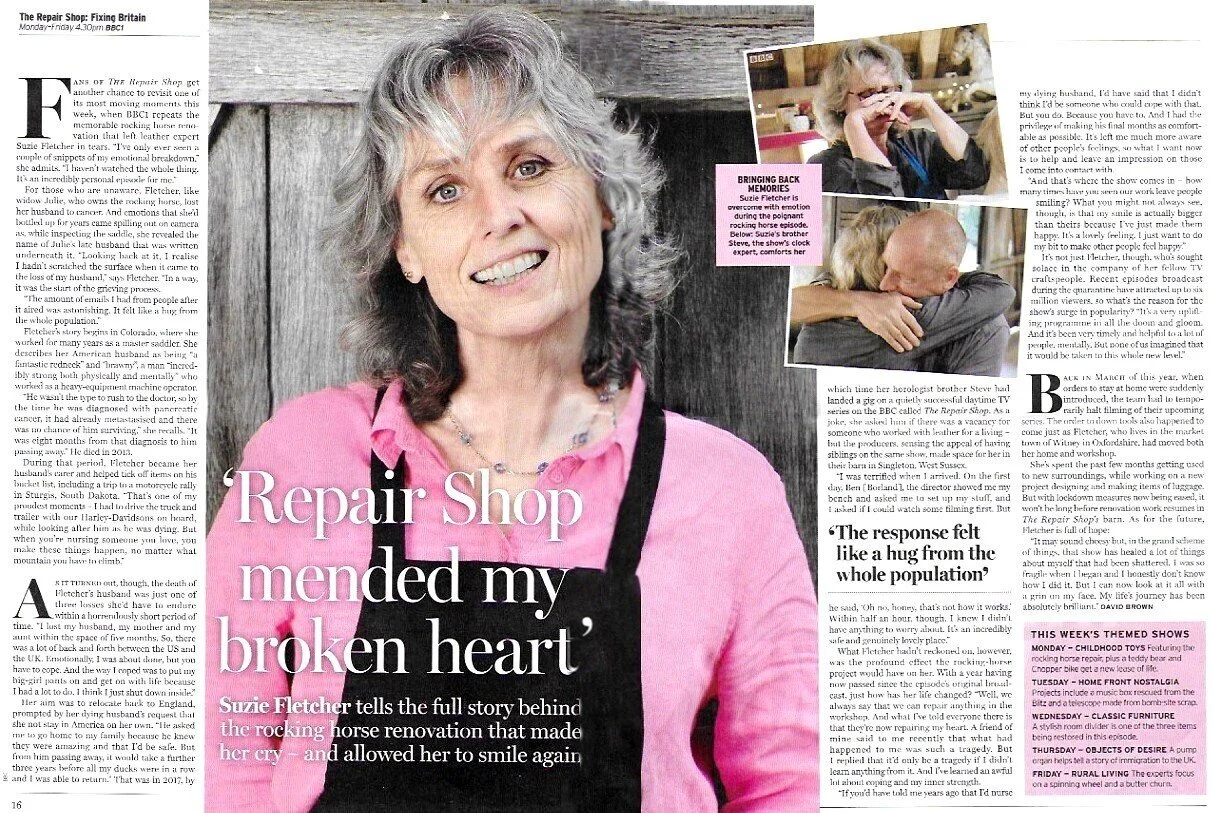
Moving Article about Suzie Fletcher from The Repair Shop
Article taken from the Radio Times magazine
I came across this article in the Radio Times magazine a few weeks ago. It is a lovely and touching account about the talented leather worker, Suzie Fletcher, from the popular BBC show, The Repair Shop. She tells how working on the show has helped her process the grief for the tragic loss of her husband to cancer as well as the deaths of her mother and aunt within 5 months of each other! I love tuning in to watch the Repair Shop on BBC 1 to see what all the crafts people are up to, but I am especially interested in what Suzie is tasked to do being a fellow leather worker myself! I run leather courses and have had many people through my studio doors who have said they have been inspired by the programme and love how it is helping to keep craft alive. It’s an amazing advocate for true craftsmanship and the act of repairing items (of particular sentimental value) that may otherwise be thrown away. A true backlash to our very digital and screen based age which is truly refreshing and very much needed.

ALL ABOUT LEATHER
Article about types of leather and how they are made
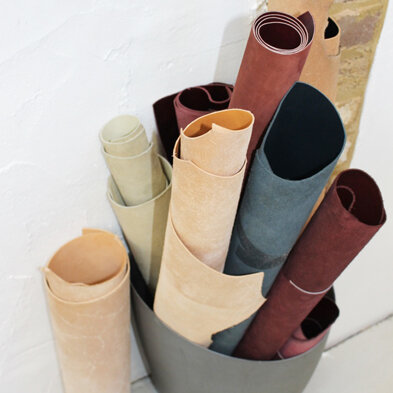
Vegetable tanned leather
Leather is a durable, tactile and versatile material that has been used for a countless variety of products over thousands of years. It is one of a few materials that many believe actually improves with age. It is Important to know and understand a bit about how leather is produced in order to best know how to use and work with it.
Leather comes from the skin of an animal, mainly cow, sheep and pig hide. The skin is treated to preserve it in a process known as tanning and there are two main methods of tanning leather; chrome and vegetable.
Vegetable tanning
This is the traditional method utilising the tannins found in vegetable matter such as tree bark, wood, leaves and some fruits. Skins are soaked in liquid rich in these extracts producing strong and firm leather. This type of leather is therefore perfect for making things like saddles, belts and shoes as it retains most of it’s natural oils making it easy to mould into shapes and emboss with pressure.

Chrome tanning
This is a relatively modern way of dyeing leather compared to vegetable tanning. It was invented in the mid 19th century and uses a solution of chemicals, acids and salts including chromium sulphate. This method creates more soft and stretchy leather as the chemicals break down the natural fibres in the material. It is a much faster method and the leather can be dyed in a wide variety of colours making it much more preferable to the fashion industry. However, it is considered much more harmful to the environment due to the chemicals used. This may be something to consider when buying your leather or deciding which projects to make. Due it’s structure and softness, chrome dyed leather generally requires heat for any embossing to be permanent.
Generally, vegetable tanned leather is better for hand stitching and chrome-tanned leather is better for machine stitching/sewing. If in doubt, ask when you buy and explain what you wish to make with it and the suppliers will advise you as to which is the most suitable leather to buy.
Buying Leather
When starting out with leatherwork it is always advisable to purchase in person if you can. Being able to handle the leather and check it for any holes or imperfections is vital. Leather can be very expensive to buy and usually the smallest quantity you can buy is half a hide, which, depending on the thickness and quality could be anything from £30 to £300! Hides or large pieces are usually sold by size (square footage) and graded by thickness and offcuts are priced by weight. If you can, buy offcuts or reduced leather from sale bins for small projects to start with where you can afford to get small pieces in terms of your project and budget. Then work up to buying larger pieces when you are more confident in your skills, have more understanding of how leather works when sewing and know what colours and types of leather you like working with.
Often, unless you need to create many pieces in the same leather on a regular basis, you may never need to buy a full hide of leather. Many leather suppliers have a good supply of offcuts and sale pieces that are more than large enough for all of the projects in this book! Happy crafting!
My Last Group Workshop!
Notebook Cover Workshop with 12 lovely ladies!
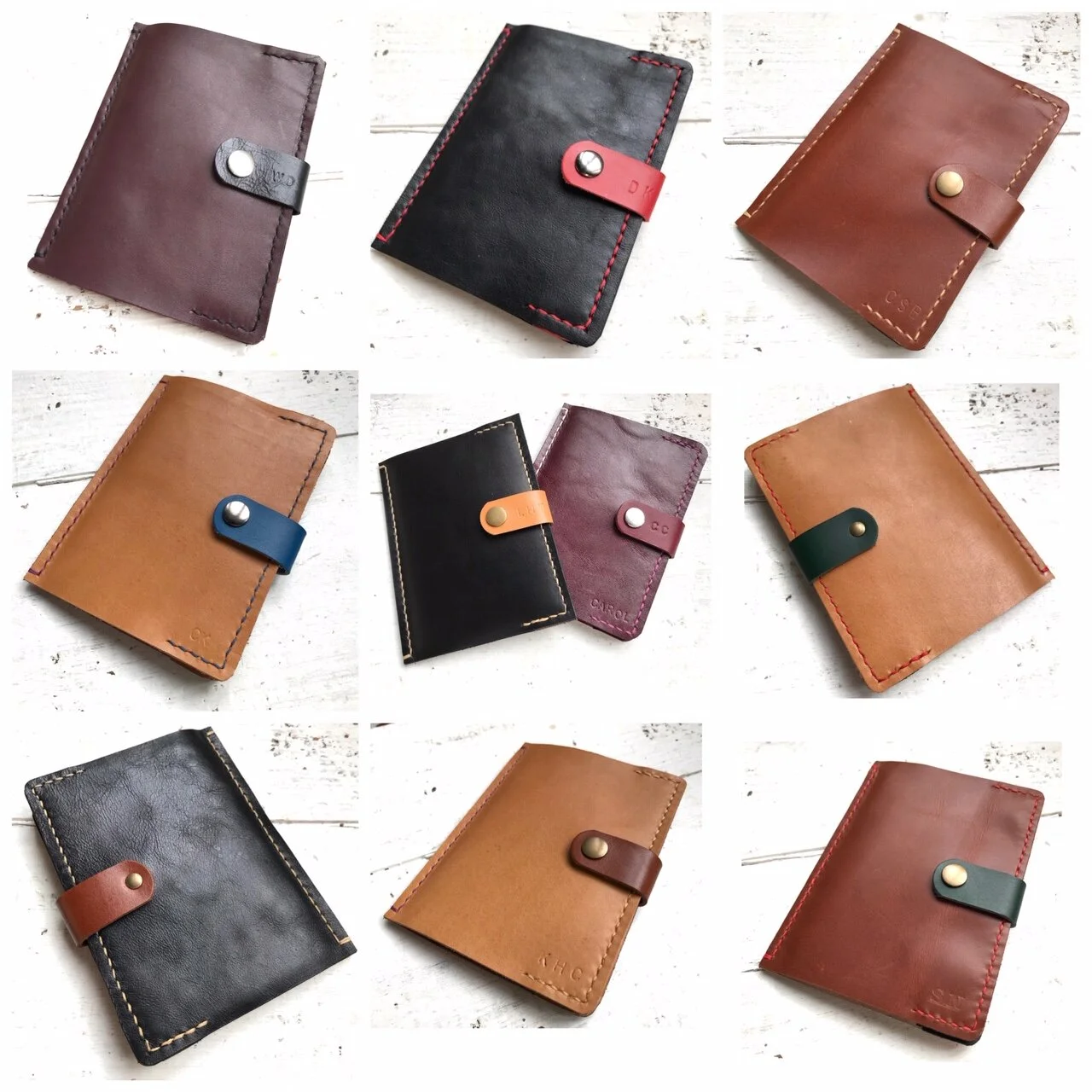
Little did I know it at the time but this was my last large group workshop, for a while anyway. 12 lovely ladies came along for a 3 hour hand stitched leather notebook cover workshop at the fabulous Arts & Crafts Centre in Cranleigh at the beginning of March 2020, just before the lockdown.
They all made their own notebook covers complete with clasps and embossed initials or names. It was a great morning and I miss teaching groups like that both big and small. Hopefully soon I will be able to teach again even if just one to one to start with.