
Repairing Leather Goods: Giving Beloved Pieces a Second Life
In recent years, I’ve seen a growing shift in how people think about their belongings — particularly leather goods. Rather than throwing items away at the first sign of wear, more and more customers are choosing to repair, restore, and preserve pieces that still have value, both financially and emotionally. Leather repair has become a significant and rewarding part of my work, and one I feel strongly about.
Why I Do Repairs
People come to me for many reasons. Sometimes it’s purely practical: replacing a worn strap or fixing a broken zip is far more economical than buying new, especially when it comes to luxury items. Designer bags in particular can retain — or even increase — their value when properly cared for, making repair a sensible long-term investment. Often, though, the motivation is sentimental. A bag carried for years, a jacket inherited from a loved one, or a suitcase that has travelled the world holds memories that simply can’t be replaced. Being trusted to work on these items is something I don’t take lightly. From my perspective as a maker, repairs are also deeply satisfying. They provide a steady and meaningful income stream, but more importantly, they allow me to save well-made items from landfill and give them a new lease of life — something that aligns closely with my values around sustainability and responsible consumption.
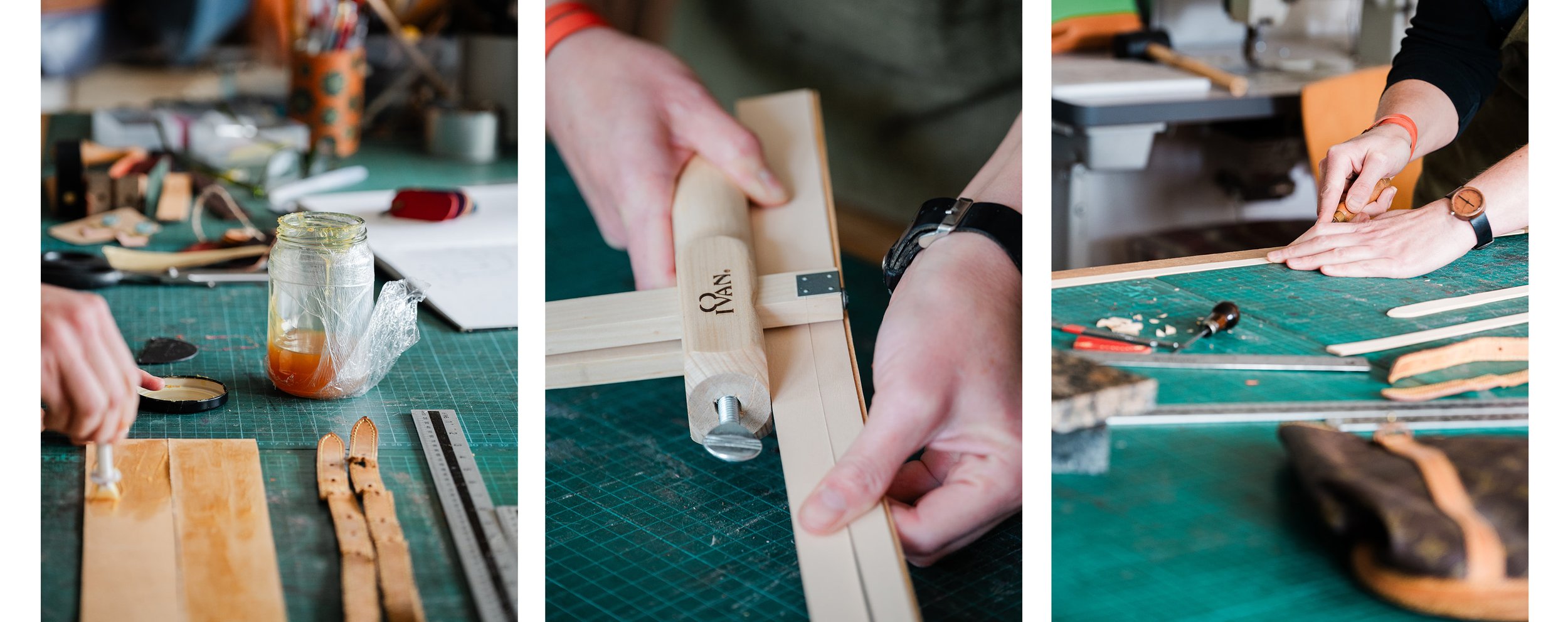
Remaking leather straps for a Louis Vuitton Bucket Bag; glueing, cutting and shaping
What I Repair
The majority of my repair work focuses on leather bags and accessories, including wallets and belts. I also undertake cosmetic repairs to shoes — though it’s worth noting that I am not a cobbler, so structural shoe repairs are outside my remit.
In addition, I regularly work on vintage suitcases, Leather jackets, particularly rips, tears, and colour restoration, Interior linings and trims
Each item presents its own challenges, and no two repairs are ever quite the same.
Some of the most frequent issues I see include:
Broken or weakened straps, often in high-stress areas
Faulty or broken hardware, especially zips
Worn corners, piping, and edges
Common Repair Techniques I Use
Full colour restoration to revive faded or scuffed leather
Lining replacements where interiors have deteriorated
Top trim replacement on bags & corner repairs with filler and repainting
Repairs to jacket tears, followed by careful colour blending
Every repair begins with a thorough assessment, followed by a considered approach that balances durability, aesthetics, and respect for the original design. Below are some examples of my repair projects with techniques used as described above.
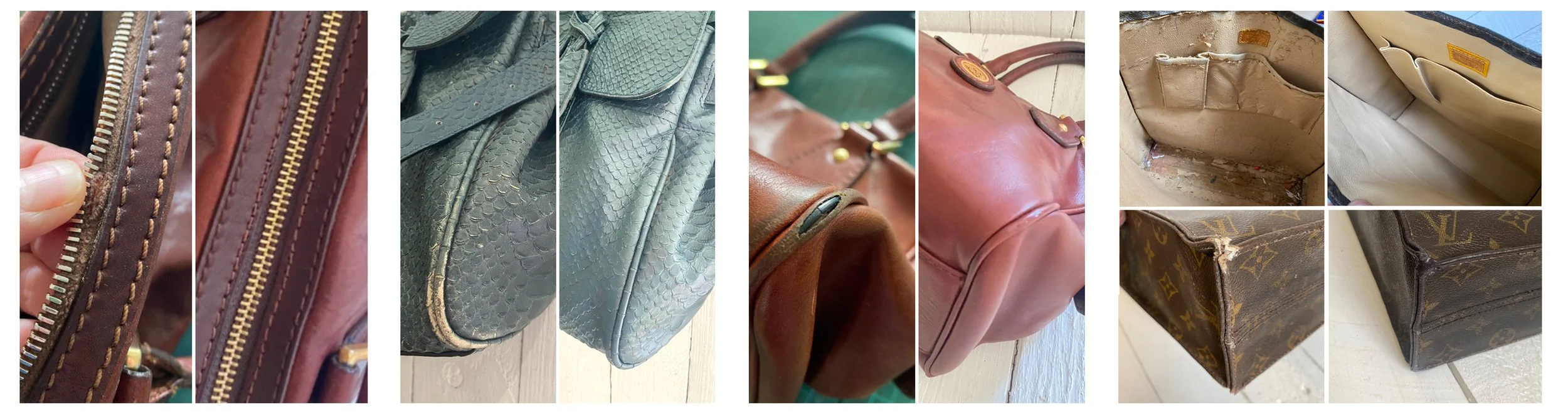
Before and After: 1. Zip replacement, 2. Colour restoration of a Croc Print Mulberry bag, 3. Piping repair on a Bridge Bag, 4. Complete restoration of a Louis Vuitton Tote bag including new lining and corner repair & recolour
Frustrations and Learnings
One of the more frustrating — and eye-opening — aspects of repair work is discovering the materials used inside some high-end designer pieces. Despite the price tags, I frequently encounter straps and stress points constructed from synthetic or mediocre materials, sandwiched between thin layers of leather. These areas naturally fail first, particularly on heavily used bags.
This is something I’ve seen repeatedly with major luxury brands, including names such as Louis Vuitton and Chanel. While the exterior craftsmanship may look impressive, the internal construction doesn’t always match the brand’s reputation — which makes skilled repair all the more important.
A Thoughtful Alternative to Replacement
Ultimately, leather repair is about slowing things down: valuing what we already own, making thoughtful choices, and extending the life of well-loved items. Whether it’s a practical fix or a sentimental restoration, repair offers an alternative to replacement — one that’s kinder to both your wallet and the environment. These principles underpin my own designs, with every piece carefully made to last and be enjoyed for years to come.
If you have a leather item in need of attention, I’m always happy to advise on what’s possible and help you decide the best next step. See my Repairs Instagram account here for more examples of previous work or check out my website page here for next steps if you have an item in need of some TLC.